

Tarot journaling can be a simple and creative way to reflect on your thoughts, experiences, goals, and emotions. If you’re new to tarot, you don’t need complicated layouts or large card spreads to get started. A few thoughtfully chosen cards can provide useful prompts for self-reflection and help you build a consistent journaling practice.
These beginner-friendly tarot journal spreads are designed to be easy to understand and flexible enough for daily or weekly use. You can write down the cards you pull, describe the imagery that stands out to you, and then explore how each position connects to your own experiences. Here are 8 simple tarot journal spreads for beginners.
1. The Daily Check-In — 1 Card

A one-card spread is one of the easiest ways to begin.
Ask:
- What should I reflect on today?
After drawing your card, write down your first reaction before checking its traditional meaning.
Journal prompt:
“What does this card make me notice about today?”
2. Past, Present, Future — 3 Cards

This classic three-card spread can help you reflect on how a situation has developed.
Card 1: What influenced me?
Card 2: What am I experiencing now?
Card 3: What possibility should I consider next?
Use the cards as reflection prompts rather than fixed predictions.
3. Situation, Challenge, Support — 3 Cards

Use this spread when you’re thinking about a specific situation.
Card 1: What is happening?
Card 2: What challenge should I recognize?
Card 3: What resource or quality could support me?
Write a few sentences about how the three themes connect.
4. Release, Keep, Begin — 3 Cards

This is a useful spread for personal resets and new beginnings.
Card 1: What can I release?
Card 2: What should I continue nurturing?
Card 3: What can I begin exploring?
Finish your journal entry by writing one practical action inspired by the spread.
5. Mind, Body, Spirit — 3 Cards
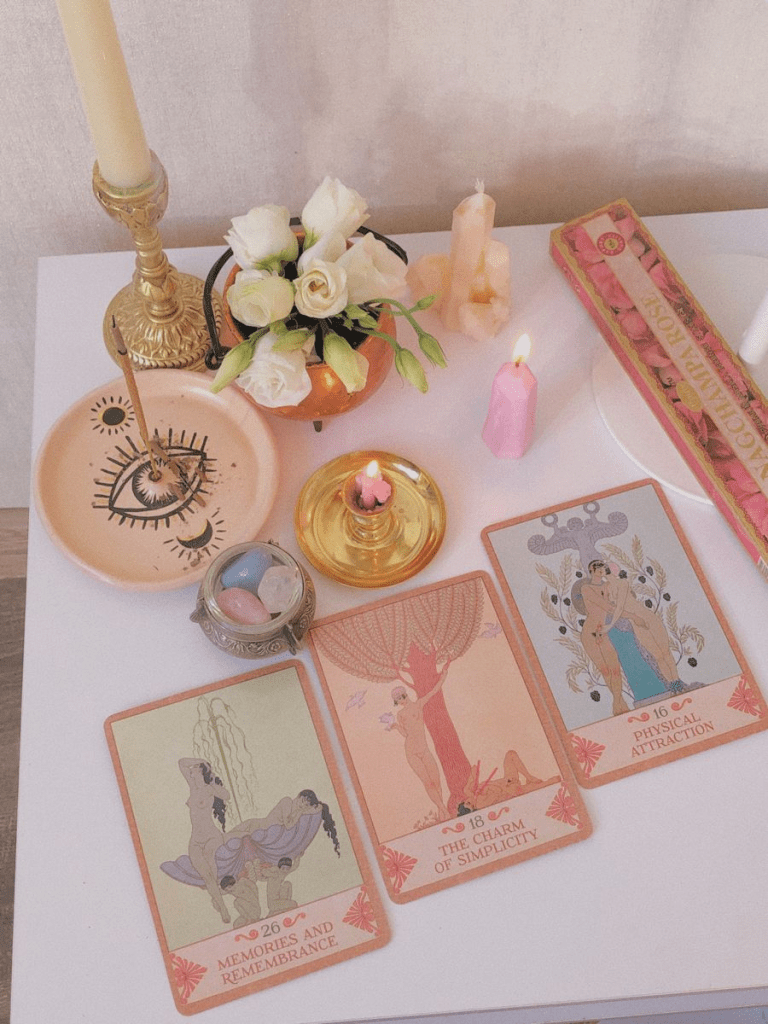
Use three cards to reflect on different areas of your well-being.
Card 1: What is occupying my mind?
Card 2: What does my body need attention to?
Card 3: What brings meaning or inspiration?
Keep your reflections personal and grounded in your current experiences.
6. Goal Reflection — 4 Cards
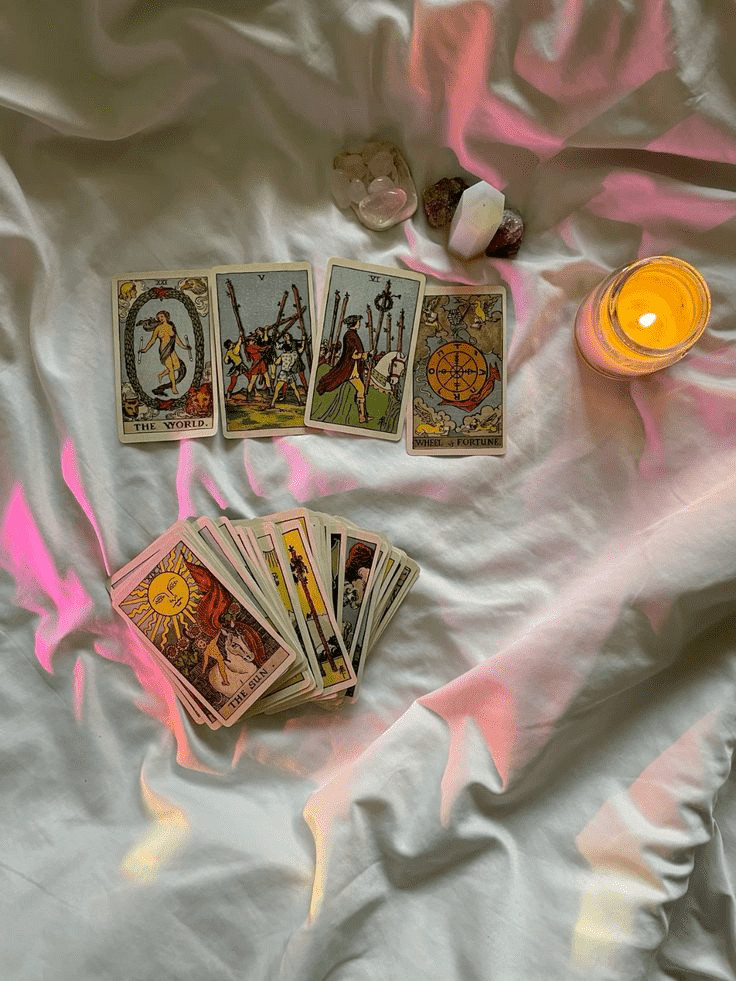
This spread can help you think through a personal goal.
Card 1: What motivates me?
Card 2: What may be getting in my way?
Card 3: What strength can I draw on?
Card 4: What is one realistic next step?
Use your journal to turn the final card into a specific action.
7. Self-Reflection — 4 Cards
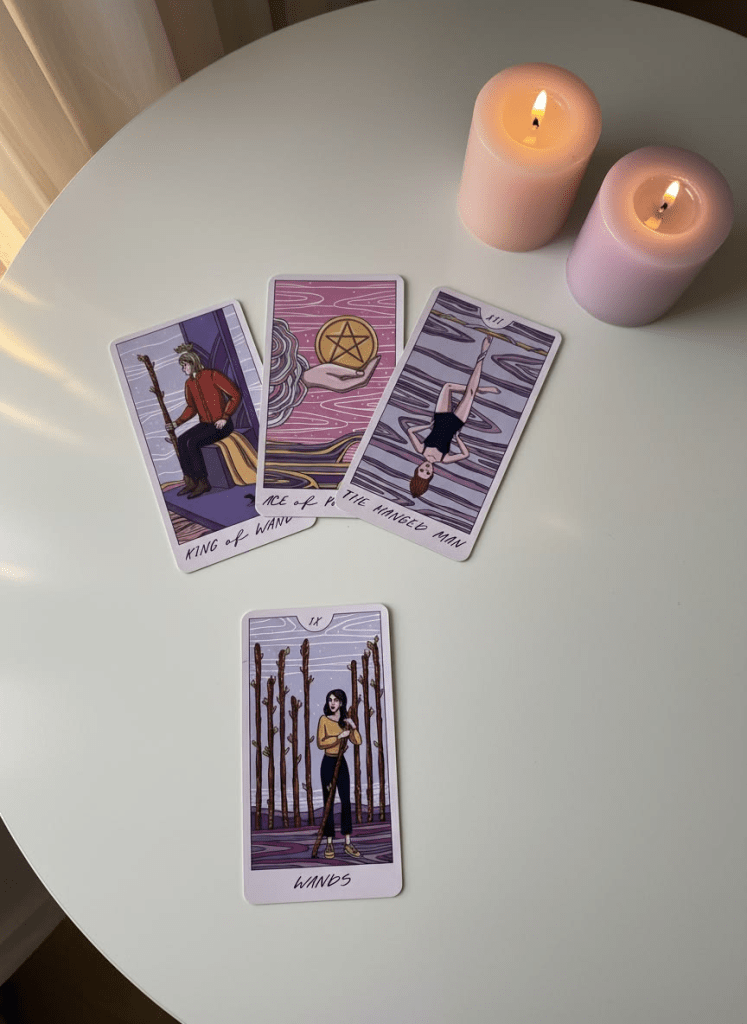
Explore your current mindset with four simple questions.
Card 1: What am I feeling?
Card 2: What am I overlooking?
Card 3: What am I learning?
Card 4: What do I want to remember?
This spread works especially well as a weekly journaling exercise.
8. Monthly Reset — 5 Cards

Use this spread at the beginning or end of a month to reflect and set intentions.
Card 1: What defined the previous month?
Card 2: What lesson can I carry forward?
Card 3: What deserves my attention now?
Card 4: What can I let go of?
Card 5: What intention do I want to set?
End your entry with one short sentence describing how you want to approach the month ahead.
Summary
Simple tarot spreads can make journaling more structured while leaving plenty of room for your own interpretation. Start with a one-card or three-card spread, write down your immediate impressions, and then connect the symbolism to your real-life experiences. As you become more comfortable, you can experiment with four- and five-card layouts. The goal is thoughtful reflection and self-awareness rather than trying to predict exactly what will happen.
Frequently Asked Questions
What tarot spread is best for beginners?
A one-card or three-card spread is usually the easiest place to start because the positions are simple and the reading is easy to organize.
How many cards should I pull for tarot journaling?
Start with one to three cards. You can gradually use larger spreads once you’re comfortable interpreting multiple positions.
Do I need to know every tarot card meaning?
No. You can begin by describing the card’s imagery, symbols, colors, and your personal reaction before consulting a traditional interpretation.
Can I create my own tarot spread?
Absolutely. Choose questions that are relevant to your current situation and assign one card to each question.
How often should I use a tarot journal spread?
You can use a spread daily, weekly, monthly, or whenever you want a structured reflection exercise.
Should I use reversed cards?
Reversals are optional. Beginners may find it easier to start with upright cards and introduce reversals later if they want to.
Can tarot spreads predict the future?
Tarot journaling is best treated as a reflective practice. Cards can encourage you to consider perspectives and possibilities, but they should not be treated as guaranteed predictions.
What should I write after a tarot spread?
Record the cards, your first impressions, the traditional meanings you want to consider, and any connections you notice to your current experiences.