An indoor kitchen garden is a simple way to keep fresh herbs and leafy greens within easy reach, even if you do not have a backyard or outdoor garden. A sunny windowsill, kitchen counter, open shelf, or small corner can become a productive growing space with the right containers and plants. Growing herbs indoors can also make everyday cooking more enjoyable because you can snip exactly what you need instead of buying a large bunch that may go unused. Basil, mint, parsley, chives, cilantro, and thyme are just a few options that can work well in indoor conditions.
You do not need a large collection of gardening supplies to get started. The most important things are suitable containers with drainage, appropriate potting mix, enough light, and regular but careful watering. If natural sunlight is limited, a small grow light can help support plants. You can also make your indoor kitchen garden part of your décor by choosing attractive pots, using vertical shelves, or grouping plants in a dedicated herb station. These eight indoor kitchen garden ideas can help you create a fresh, useful, and attractive growing space that fits your kitchen and your lifestyle.
1. Create a Sunny Windowsill Herb Garden
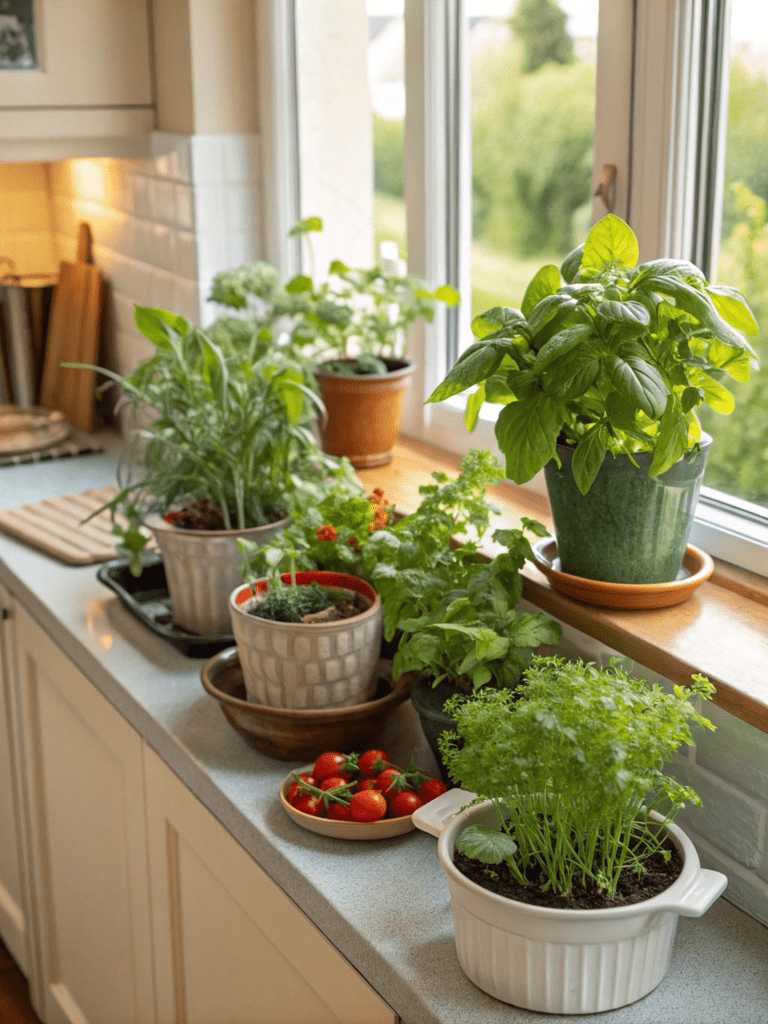
A sunny windowsill is one of the easiest places to start an indoor kitchen garden. It uses space that might otherwise remain empty and keeps herbs conveniently close to your cooking area.
Choose compact herbs such as basil, thyme, chives, parsley, or oregano. Place each herb in its own small container or use a long planter to create a simple windowsill herb garden.
Make sure the containers have drainage holes so excess water can escape. Grouping plants in matching pots can create a neat, coordinated appearance, while colorful or decorative containers can add personality to the kitchen.
Rotate the pots occasionally so plants receive light more evenly. Check the soil before watering rather than following a strict daily schedule, since indoor conditions can vary.
A windowsill garden is especially convenient for herbs you use frequently. You can simply reach over and snip a few leaves while preparing meals.
If your window does not receive enough natural light, consider supplementing it with a small grow light. This can make it easier to grow herbs consistently throughout the year.
2. Use a Tiered Kitchen Plant Shelf
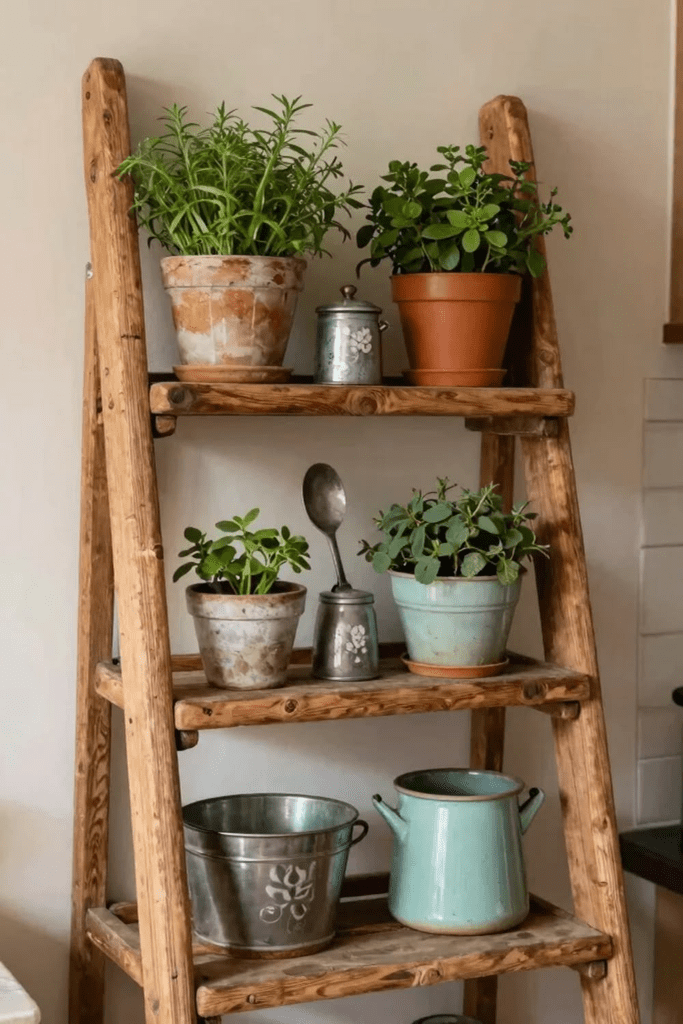
If you have limited counter space, think vertically. A small tiered shelf can hold several herb pots without requiring a large footprint.
Choose a shelf that fits comfortably against a wall or near a bright window. Place taller plants toward the back and smaller herbs toward the front so each plant has access to light.
You can dedicate each level to different types of plants. One shelf might hold cooking herbs, another leafy greens, and another small starter plants or seedlings.
For a cohesive look, use containers with similar shapes or materials. Terracotta pots, simple ceramic planters, or neutral-colored containers can make the garden feel like part of the kitchen rather than an assortment of random pots.
Make sure the shelf is sturdy and positioned somewhere that will not interfere with food preparation or kitchen traffic.
A tiered shelf is also easy to expand. Once you become comfortable caring for a few herbs, you can gradually add more varieties.
This idea is particularly useful for apartment kitchens and small homes where horizontal gardening space is limited.
3. Grow Herbs in Hanging Planters
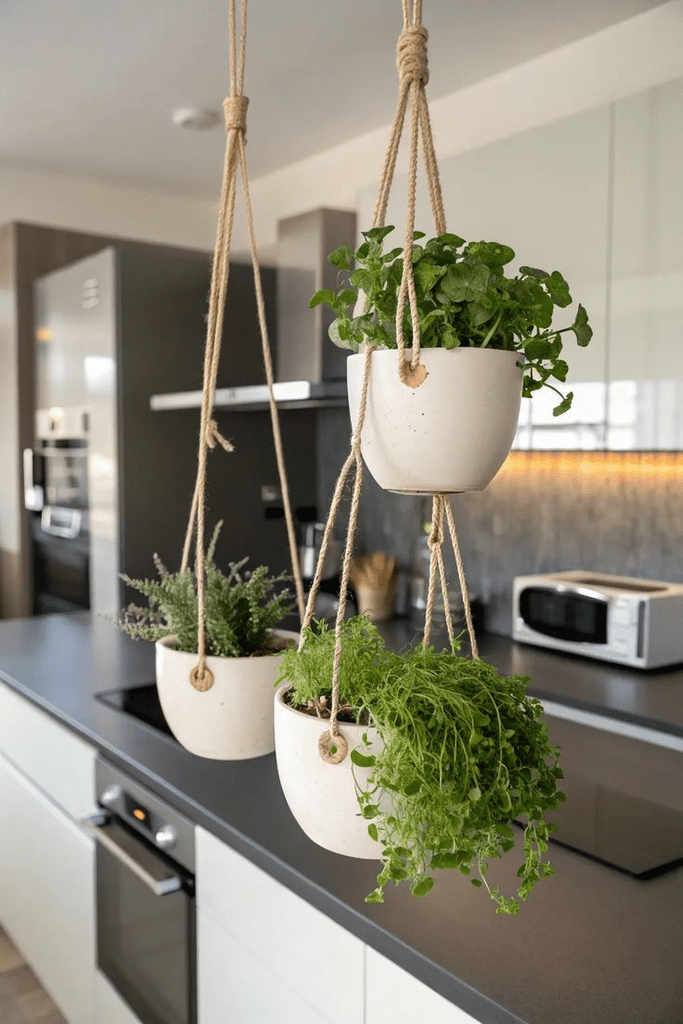
Hanging planters are another creative way to maximize vertical space. Instead of placing every plant on the counter, suspend a few lightweight containers from a secure ceiling hook, wall system, or appropriate hanging fixture.
Trailing herbs such as mint and oregano can look attractive when allowed to grow downward. Compact herbs can also work well in hanging containers when positioned in a bright location.
Keep hanging planters away from areas where people frequently walk or work. They should be securely installed and easy enough to reach for watering and harvesting.
Use containers with drainage and consider placing a suitable drip tray or planter system underneath if needed to protect surrounding surfaces.
You can create a small cluster of hanging pots for a decorative effect or use one planter as a focal point.
Hanging gardens are especially useful when counter and shelf space is limited. They also add greenery at eye level, making the kitchen feel more lively.
Just remember that plants still need appropriate light, so choose a location based on growing conditions rather than appearance alone.
4. Set Up a Countertop Herb Station
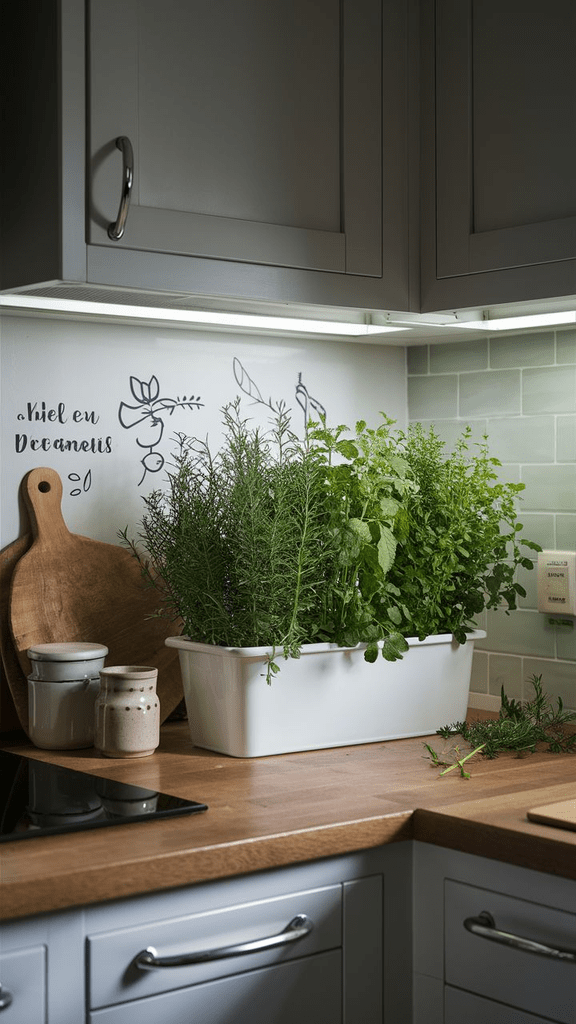
If you frequently cook with fresh herbs, create a dedicated countertop herb station. Instead of scattering individual pots throughout the kitchen, group them together on a tray or shallow plant stand.
Choose herbs based on what you actually use. Basil, parsley, cilantro, chives, thyme, and rosemary can be practical choices depending on your cooking style.
A tray makes the collection easier to move when you need to clean the counter or adjust the plants’ position for better light. It can also help contain small amounts of water or soil.
Label each pot so you can quickly identify your herbs, especially if you are growing similar-looking varieties.
Avoid placing plants directly beside a hot stove, oven, or appliance that produces excessive heat. Herbs generally do better when they are protected from extreme temperature changes.
You can also keep a small pair of clean herb scissors nearby for harvesting.
A countertop station combines practicality and décor. Instead of treating your herbs as ordinary houseplants, you make them an intentional part of your cooking routine.
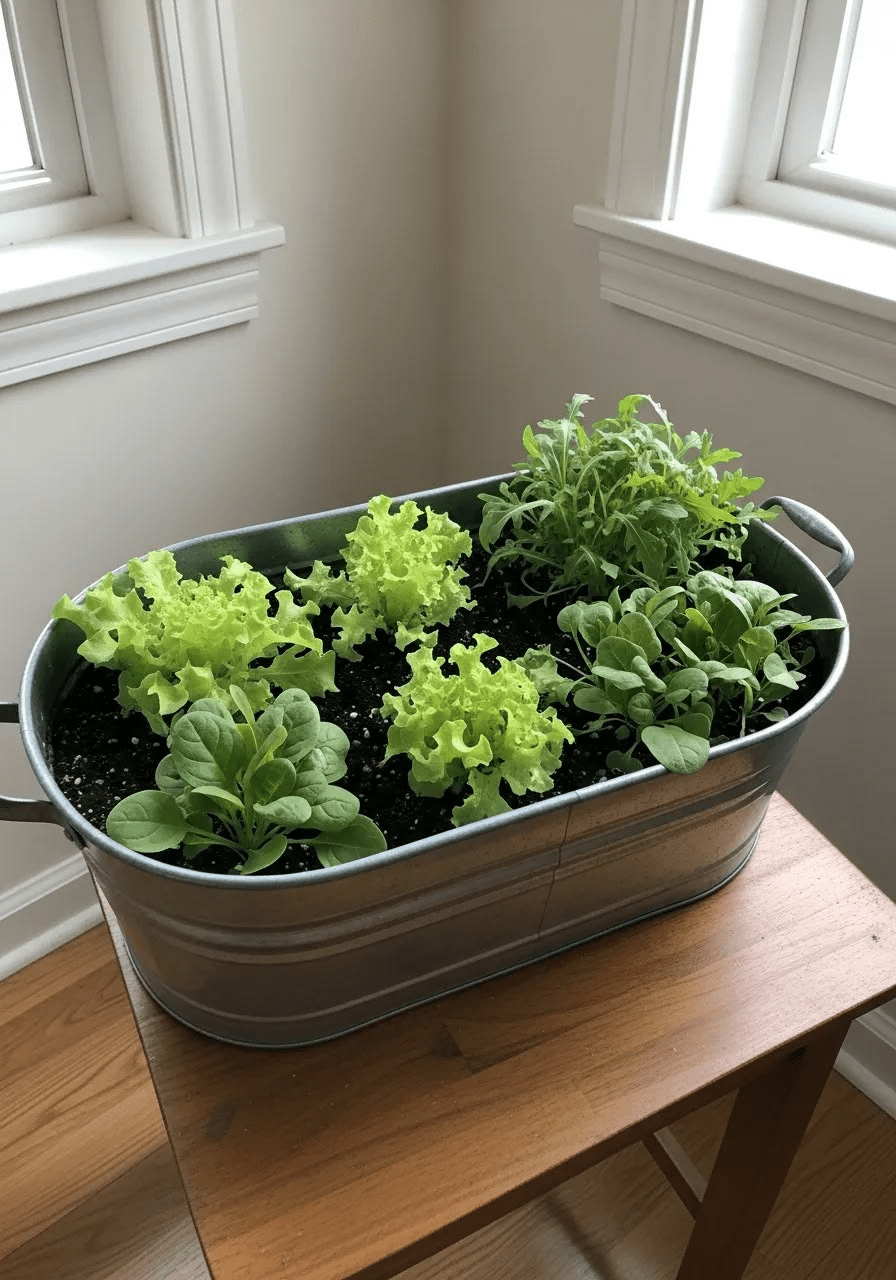
5. Grow a Mini Indoor Salad Garden
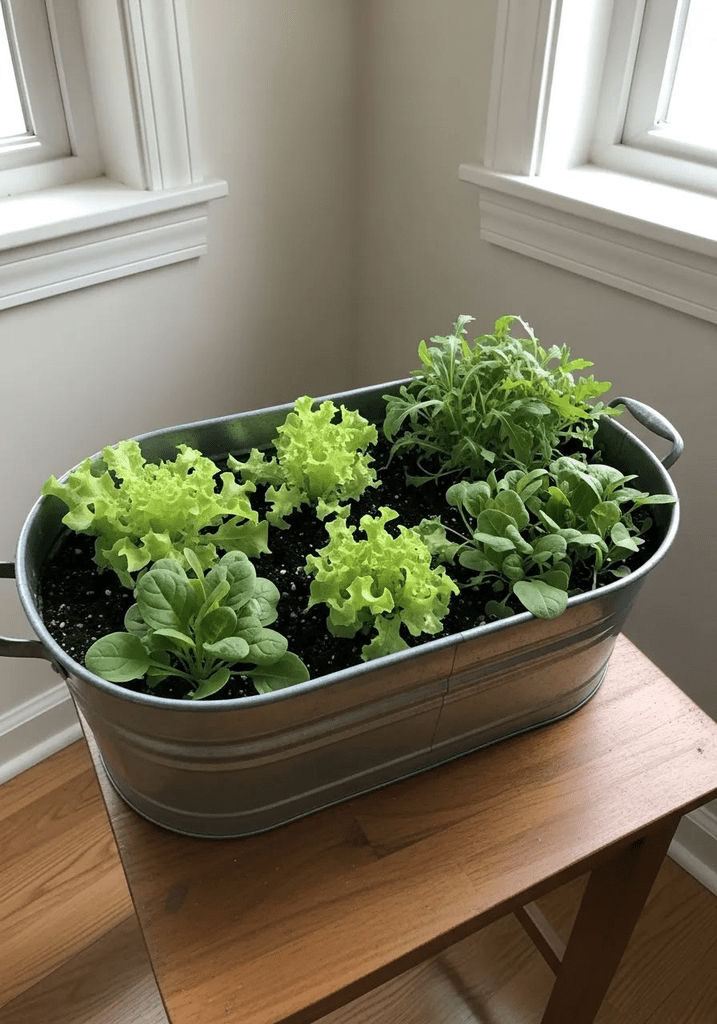
If you want more than herbs, dedicate a small section of your kitchen to quick-growing leafy greens. Lettuce, arugula, baby spinach, and microgreens can provide fresh ingredients for salads and sandwiches.
Use shallow containers for plants with smaller root systems, and make sure excess water can drain properly. Sow seeds according to the instructions for each variety and provide adequate light.
One advantage of growing leafy greens indoors is that you can harvest young leaves as needed. Rather than removing the entire plant, you can often harvest outer leaves while allowing the plant to continue growing, depending on the variety.
Try planting several containers at different times rather than sowing everything on one day. This can help create a more continuous supply of young greens.
Microgreens are another option for beginners because they can be grown in relatively small containers and harvested while young.
A mini salad garden can turn an unused corner into a practical source of fresh ingredients. It is also a fun way to introduce more greenery into your kitchen without needing a large collection of pots.
6. Build a Repurposed Container Garden
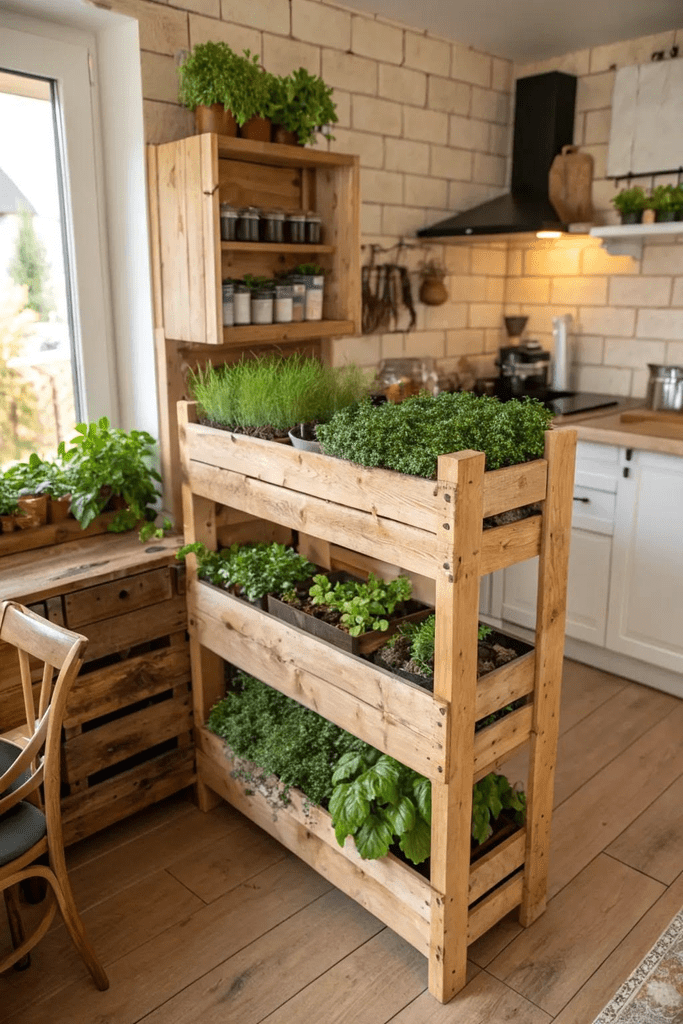
You do not necessarily need expensive planters to create an indoor kitchen garden. Repurposed containers can become attractive homes for herbs and greens when prepared properly.
Small food containers, jars, tins, wooden boxes, or other suitable vessels can work as decorative planters. However, containers need appropriate drainage for most plants, so add drainage holes when the material allows it and use a tray underneath.
You can personalize plain containers with labels, paint, simple patterns, or natural materials. Just make sure any materials used are appropriate for indoor gardening and will not create problems around food preparation areas.
Use containers of different sizes for visual variety, but avoid overcrowding your plants.
This approach can also make gardening more affordable because you are reusing items you already have at home.
Keep a practical mindset when choosing containers. A beautiful container that holds water without drainage may be less useful than a simple planter designed for growing plants.
With thoughtful placement, repurposed containers can give your kitchen garden a relaxed, creative, and personal look while making good use of materials that might otherwise be discarded.
7. Create a Wall-Mounted Herb Garden
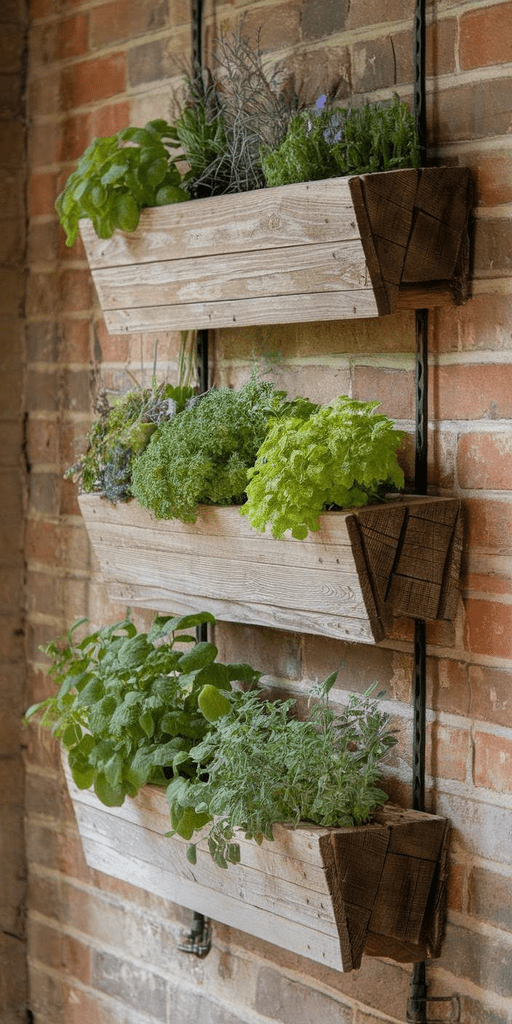
A wall-mounted garden can turn an empty kitchen wall into a vertical growing display. It is particularly useful when floor and counter space are limited.
You can use a purpose-built wall planter, mounted pots, small shelves, or another secure vertical system designed to hold plants.
Arrange herbs in a way that makes them easy to identify and harvest. Labels can make the display both attractive and practical.
Before installing anything, check that the wall and mounting hardware can safely support the weight of the containers, soil, and water. Position the garden somewhere that receives appropriate light.
A wall-mounted herb garden can become a decorative feature, especially when you use matching containers or a simple natural material such as wood.
Keep the plants within comfortable reach. A garden that looks beautiful but requires a ladder every time you need parsley is unlikely to become part of your daily cooking routine.
For renters or people who cannot drill into walls, a freestanding vertical shelf can provide a similar effect without permanent installation.
8. Add a Small Grow-Light Garden
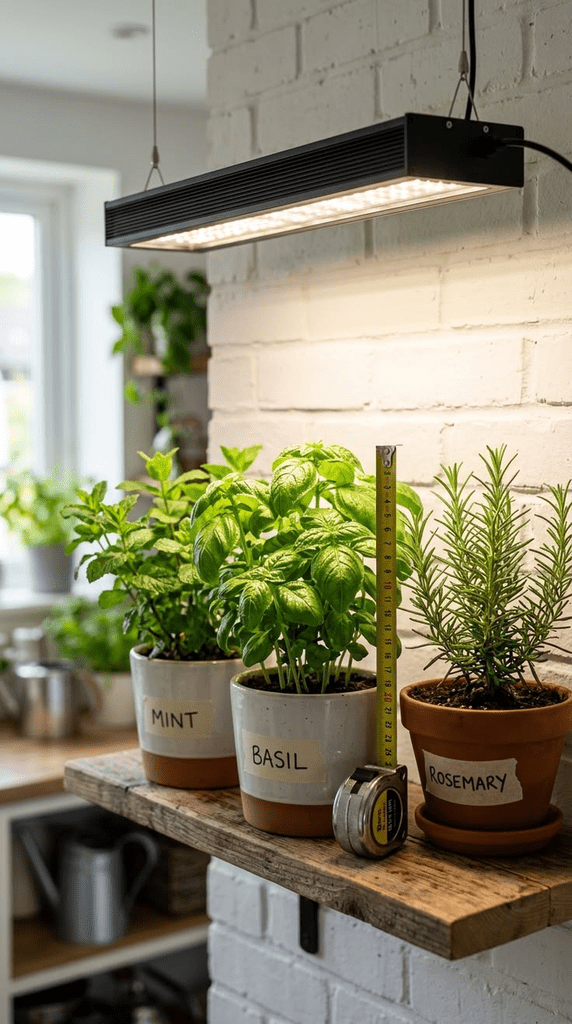
If your kitchen does not receive enough natural sunlight, a grow-light setup can help you create a more reliable indoor growing space.
Choose a compact shelf or countertop area where several herbs or greens can be grouped beneath an appropriate grow light. Keep the light positioned according to the manufacturer’s recommendations and the needs of your plants.
This setup can be especially useful in kitchens with small windows, shaded rooms, or limited direct sunlight.
Start with easy herbs and greens rather than filling the entire shelf immediately. Basil, chives, parsley, leafy greens, and microgreens can be good options depending on the growing conditions and equipment you use.
Keep cords organized and away from water. Since this is a kitchen environment, electrical safety should always be a priority.
A grow-light garden also gives you more flexibility when deciding where to place your plants. Instead of limiting the garden to the brightest windowsill, you can create a dedicated growing station in another suitable area.
With a little organization, even a dim kitchen can have a small, attractive collection of fresh herbs and greens.
Summary
An indoor kitchen garden can be as simple or elaborate as you want. A sunny windowsill, countertop tray, tiered shelf, hanging planter, or wall-mounted display can provide a convenient home for fresh herbs and leafy greens. If natural light is limited, a compact grow light can help you create a more suitable growing environment.
The best setup is one that fits naturally into your kitchen and your routine. Start with a few herbs you regularly use rather than trying to grow everything at once. Choose containers with good drainage, provide appropriate light, monitor watering carefully, and harvest regularly. With a little attention, even a small kitchen can become a fresh, green space that makes everyday cooking more enjoyable.
Frequently Asked Questions
1. What herbs are easiest to grow indoors?
Basil, chives, parsley, thyme, mint, and oregano are popular choices for indoor growing. Choose varieties based on the light and space available in your kitchen.
2. Can I grow herbs without a sunny window?
Yes. If your kitchen does not receive enough natural light, a suitable grow light can provide supplemental lighting for many herbs and leafy greens.
3. How often should indoor herbs be watered?
There is no universal schedule because watering needs vary by plant, container, soil, temperature, and light. Check the soil and water when appropriate rather than automatically watering every day.
4. Can I grow lettuce indoors?
Yes. Lettuce and other leafy greens can be grown indoors in suitable containers with adequate light, moisture, and growing conditions.
5. Do indoor herb pots need drainage holes?
For most herbs, drainage is very important because excess water can create overly wet soil. Use containers with drainage holes and a tray or saucer to protect nearby surfaces.
6. Where should I place an indoor kitchen garden?
Bright windowsills, well-lit counters, shelves, and suitable vertical spaces can work well. Keep plants away from excessive heat, cooking splashes, and areas where they could easily be knocked over.
7. Can I use recycled containers for indoor herbs?
Yes, suitable containers can be repurposed as planters. Make sure they are clean, stable, appropriately sized, and capable of providing adequate drainage.
8. How many herbs should a beginner grow?
Starting with three to five herbs is usually manageable. Choose varieties you regularly use so that caring for the garden feels practical rather than overwhelming.