
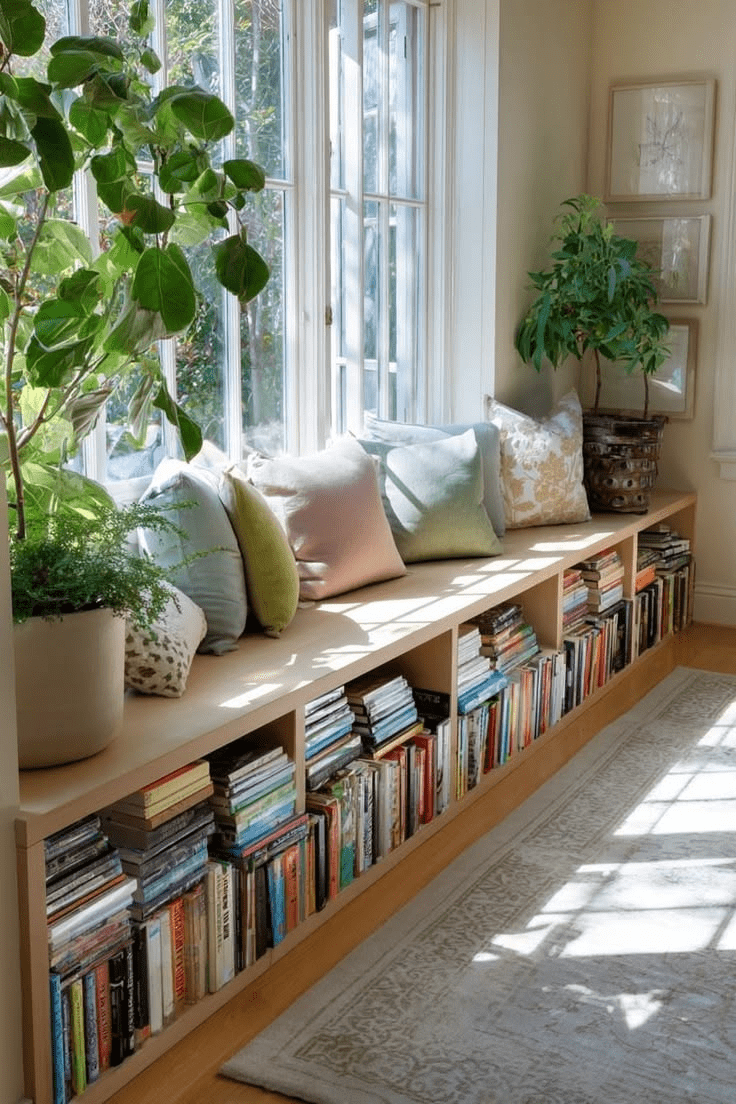
A reading nook can turn an unused corner, window area, or awkward space into one of the coziest spots in your home. Adding a bench makes the nook even more practical because it provides comfortable seating while creating opportunities for hidden storage, decorative cushions, and a dedicated place to relax with a good book. With the right design, a reading bench can also become an attractive architectural feature rather than simply another piece of furniture.
Modern reading nook benches come in many styles, from sleek built-in seats to minimalist wooden benches and upholstered window seats. The best option depends on the size of your room, available natural light, storage needs, and overall decorating style. Neutral upholstery can create a soft contemporary look, while natural wood adds warmth and texture. Built-in designs are especially useful for making the most of small or unusual spaces.
You do not need a huge room to create a stylish reading corner. A narrow window, hallway alcove, bedroom corner, or unused space beneath a staircase can potentially become a comfortable reading retreat. Add a supportive cushion, a few pillows, good lighting, and a small side table, and your bench can become a place you actually want to use every day.
1. Built-In Window Seat Bench
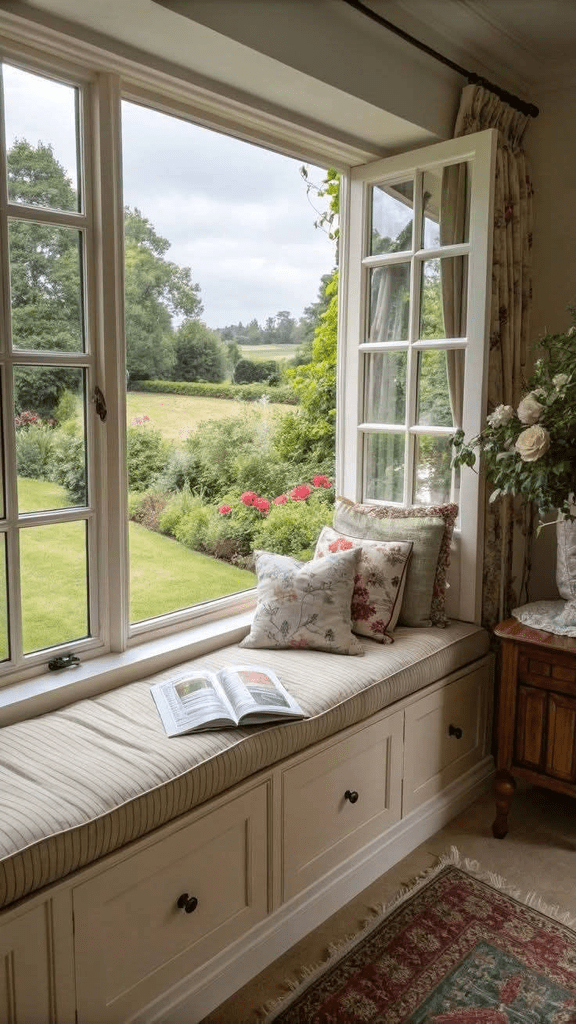
A built-in window seat is one of the most timeless ways to create a modern reading nook. It makes use of an area that might otherwise remain empty while giving you a comfortable place to sit and enjoy natural light.
Choose a simple bench with clean lines for a contemporary appearance. A neutral cushion in cream, beige, gray, or another soft shade can keep the design understated. Add a few textured pillows for comfort without making the area look overly busy.
The space underneath the bench can also be designed for storage. Drawers, lift-up compartments, or open cubbies can hold books, blankets, magazines, and other reading essentials.
Positioning the bench near a window makes the nook feel bright and inviting during the day. Add a small reading lamp for evenings so the space remains useful after sunset.
If your home has an existing deep windowsill or recessed window area, a custom bench can transform it into a functional feature. Keep the surrounding décor simple so the window and seating remain the main focus.
2. Minimalist Wooden Reading Bench
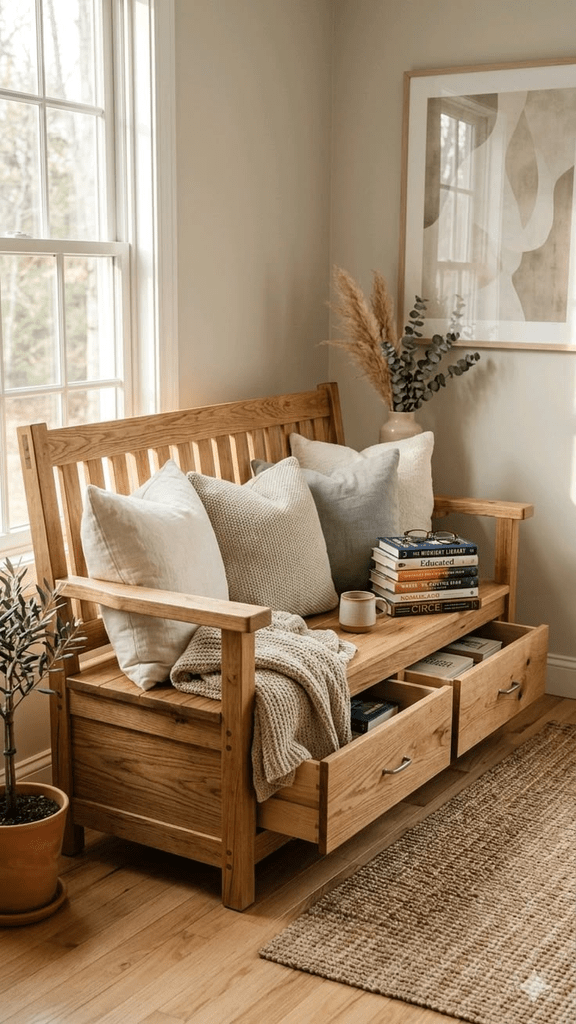
For a clean and understated home, consider a minimalist wooden reading bench. This design works particularly well with Scandinavian, Japandi, contemporary, and modern interiors.
Look for a bench with a simple rectangular silhouette and natural wood grain. Oak, ash, walnut, or similar finishes can introduce warmth without overwhelming the room.
For additional comfort, place a long seat cushion across the bench and add one or two pillows. You can choose upholstery that complements your existing walls, flooring, or curtains.
A wooden bench also gives you flexibility because it can be moved if you decide to rearrange the room. Unlike a permanent built-in, a freestanding bench can serve another purpose later.
Pair the bench with a slim floor lamp or wall-mounted reading light. A small side table can hold a cup of tea, reading glasses, or your current book.
The result is a simple reading nook that feels intentional without requiring excessive decoration.
3. Upholstered Bench With Hidden Storage
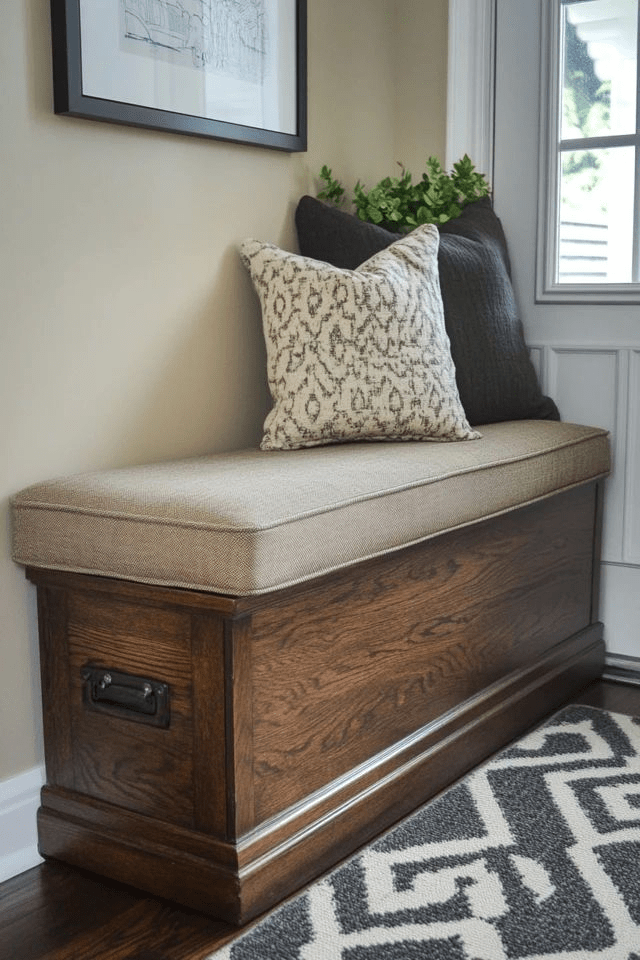
If comfort and organization are equally important, an upholstered storage bench can be an excellent reading-nook solution. It provides a soft place to sit while keeping clutter out of sight.
Choose a bench with a lift-up seat or built-in drawers. Use the storage space for books you are not currently reading, extra cushions, blankets, or other items that tend to accumulate around cozy spaces.
For a modern appearance, select upholstery in a solid neutral color. Bouclé, linen-look fabric, cotton, or other textured materials can add visual interest while maintaining a clean aesthetic.
Keep the rest of the nook relatively simple. A small bookshelf, wall-mounted sconce, and one decorative pillow may be enough.
This style works especially well in bedrooms and living rooms where storage is limited. Instead of adding a separate storage cabinet, the bench performs two functions at once.
When choosing the design, make sure the seat is deep enough to sit comfortably and that the storage mechanism is easy to access.
4. Floating Reading Nook Bench
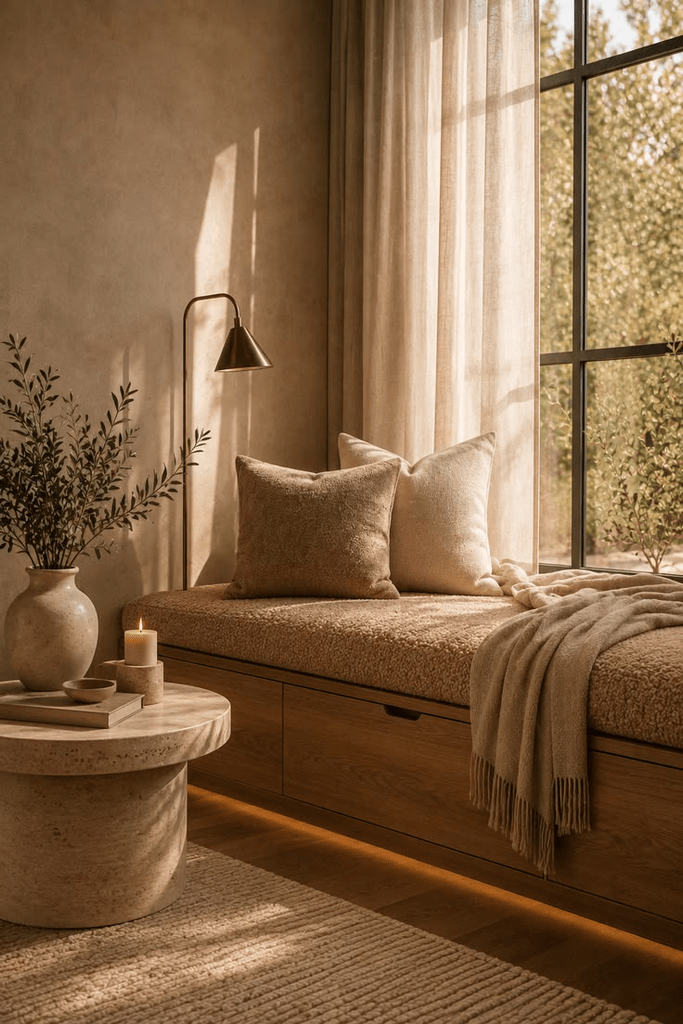
A floating bench can give a reading corner a sleek, contemporary appearance. Because the seating appears to extend directly from the wall without visible legs, it creates a visually lighter design.
This approach works particularly well in compact rooms where you want to avoid making the floor feel crowded. The open space underneath can make the area appear more spacious.
A floating bench can be finished in wood, painted cabinetry, or another material that complements the room. Add a fitted cushion for comfort and a few pillows to soften the look.
Wall-mounted lighting works especially well with this design because it keeps the floor clear. A small floating shelf can provide a convenient place for books or decorative objects.
Because floating benches typically require secure installation, they are best planned carefully with the wall structure and intended load in mind.
For a modern home with clean architectural lines, this design creates a sophisticated reading nook without taking up unnecessary visual space.
5. Cozy Corner Bench With Layered Cushions
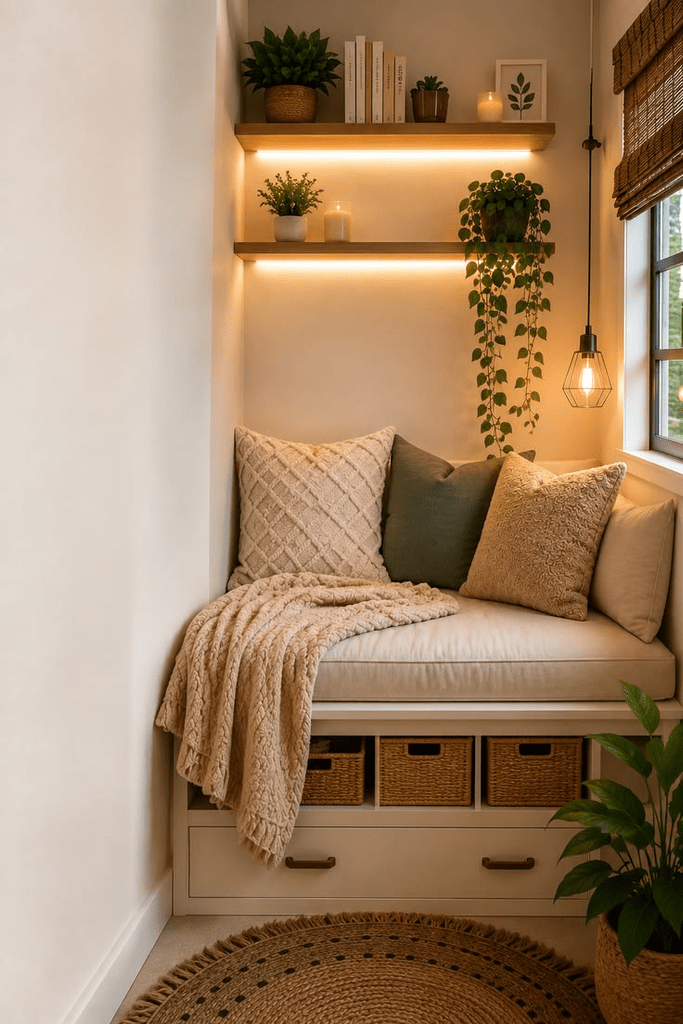
You can create a comfortable reading nook without installing a complicated built-in bench. A simple corner bench paired with plenty of cushions can create the same inviting effect.
Choose a bench that fits neatly into the corner and add a long seat cushion. Layer two or three pillows against the wall to create a comfortable backrest.
Use different textures rather than too many patterns. For example, combine a smooth seat cushion with a knitted throw and a couple of textured pillows.
A small round side table can soften the straight lines of the bench and provide space for books, drinks, or a small plant.
Lighting is also important. Place a floor lamp beside the bench or install a wall sconce above it.
This approach is especially useful for renters because you can create a stylish reading corner without making permanent changes to the home. You can also easily update the appearance by changing the cushions and textiles as your decorating preferences evolve.
6. Reading Bench With Open Bookshelves
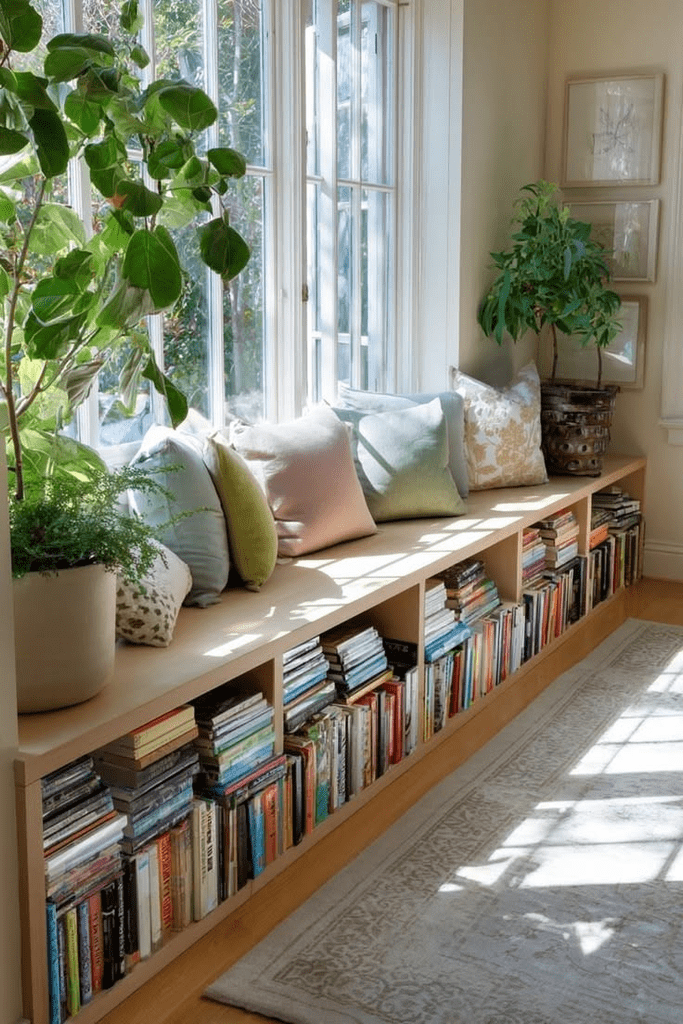
Combining seating and bookshelves is a practical way to create a dedicated reading station. Instead of placing a bench next to a separate bookcase, integrate the two into one cohesive arrangement.
A built-in design can place shelving directly beside or above the bench. This keeps your favorite books within easy reach and makes the purpose of the space immediately clear.
Keep the shelves visually balanced. You do not need to fill every compartment with books. Leave some open space for small plants, artwork, ceramics, or other decorative objects.
For a modern appearance, use straight lines and a limited color palette. Matching the shelves to the bench can make the entire unit look custom-designed.
Add a comfortable cushion and a small reading light to complete the space.
This setup is particularly useful for book lovers because it combines storage, seating, and display space. It can also encourage you to keep your current reading materials organized instead of leaving books scattered throughout the room.
7. Built-In Alcove Bench
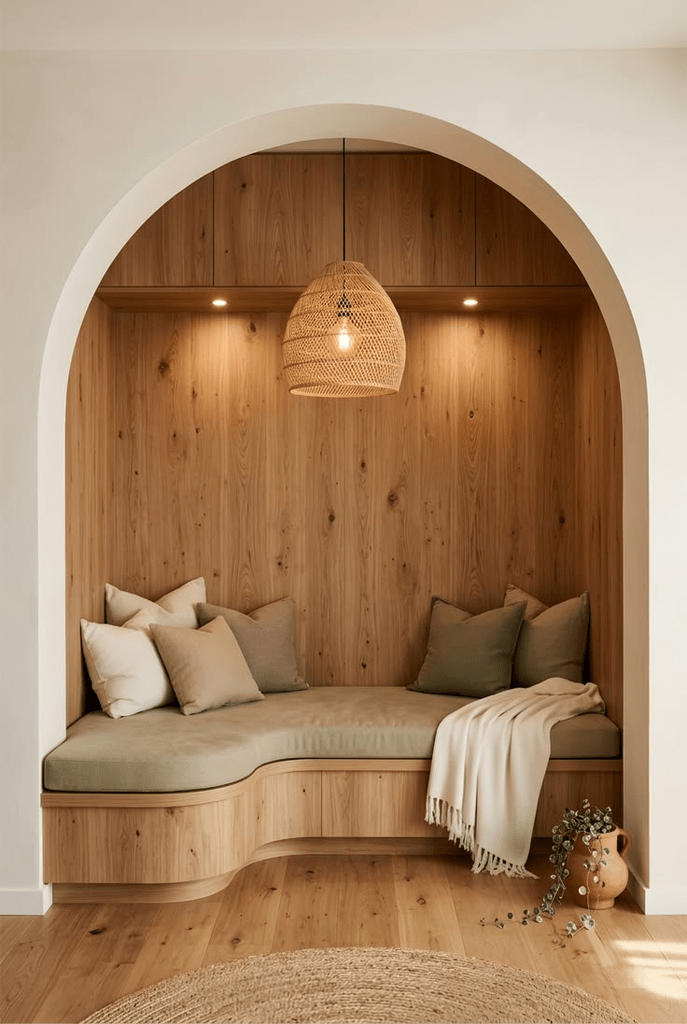
An awkward architectural alcove can become a beautiful reading nook with a custom bench. Rather than trying to hide the unusual space, make it the focal point of the room.
Measure the alcove carefully and design the bench to fit its width and depth. A fitted cushion can make the seating feel intentional and comfortable.
Use the area above the bench for a few floating shelves, artwork, or a wall-mounted light. If the alcove has a window, take advantage of the natural light by keeping the surrounding décor relatively light.
You can paint the alcove a slightly different shade from the rest of the room to visually define the reading area. Alternatively, use the same color throughout for a seamless built-in appearance.
Storage underneath the bench is another useful feature. Drawers or cabinets can help keep books and blankets organized.
This idea works particularly well in older homes, apartments, hallways, and bedrooms where architectural recesses might otherwise be difficult to decorate.
8. Modern Curved Reading Bench
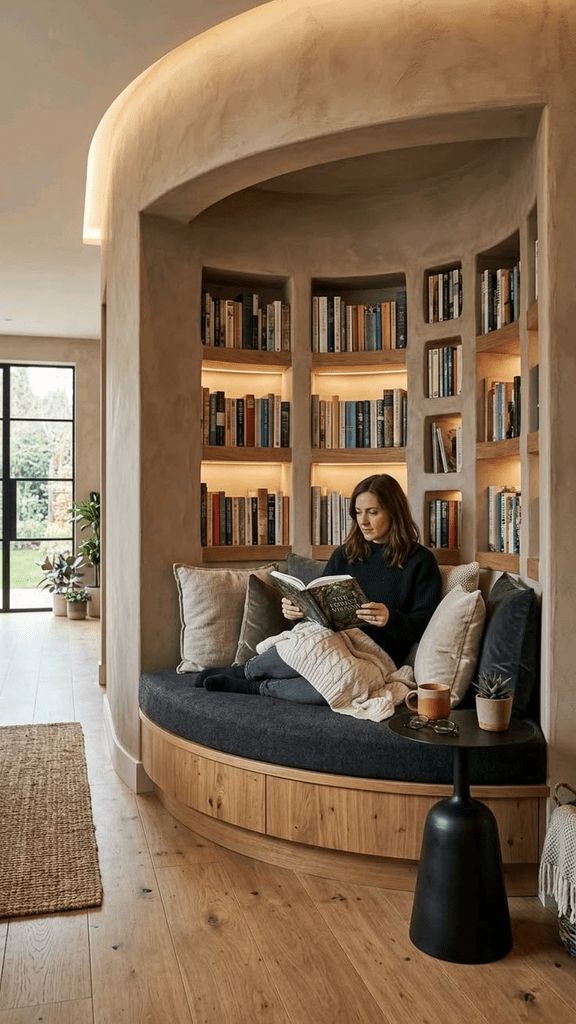
Curved furniture can introduce softness into a room filled with straight architectural lines. A curved reading bench can therefore make a reading nook feel both modern and inviting.
Look for a bench with rounded edges or a gently curved back. Upholstered designs work particularly well because fabric naturally emphasizes the softer silhouette.
Keep the surrounding furniture simple so the curved bench remains the focal point. A round side table can complement the shape, while a sculptural floor lamp can add another contemporary element.
Neutral colors such as cream, warm gray, taupe, or soft brown can give the nook a sophisticated appearance. If your room is mostly neutral, you could also introduce a subtle accent color through cushions or a throw.
A curved bench is particularly effective in larger rooms where a standard rectangular seat might feel too rigid.
The goal is to create a nook that feels visually comfortable as well as physically comfortable. Rounded shapes, soft textiles, and warm lighting can work together to achieve that effect.
9. Under-Stair Reading Bench
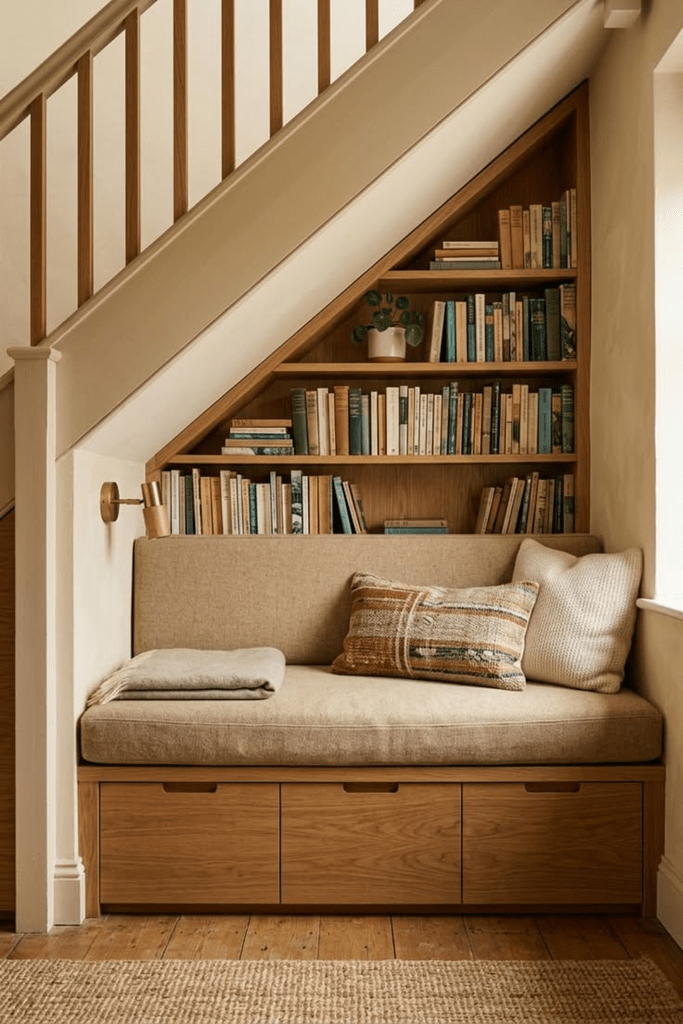
The space beneath a staircase is often difficult to decorate, but its enclosed feeling can make it surprisingly suitable for a reading nook.
Install a custom bench along the usable section of the wall beneath the stairs. Add a fitted cushion and a few pillows to create a comfortable seat.
Use the remaining space for built-in bookshelves, drawers, or cabinets. This allows the entire area to function as a compact reading station.
Lighting is especially important under stairs because the area may receive limited natural light. A wall sconce, recessed light, or adjustable reading lamp can make the space more practical.
Keep the décor relatively simple so the small area does not feel crowded. A small artwork, plant, or basket may be enough to add personality.
This idea is particularly useful when floor space is limited. Rather than adding furniture to a main living area, you can turn an underused architectural space into a purposeful corner.
10. Modern Daybed-Style Reading Bench
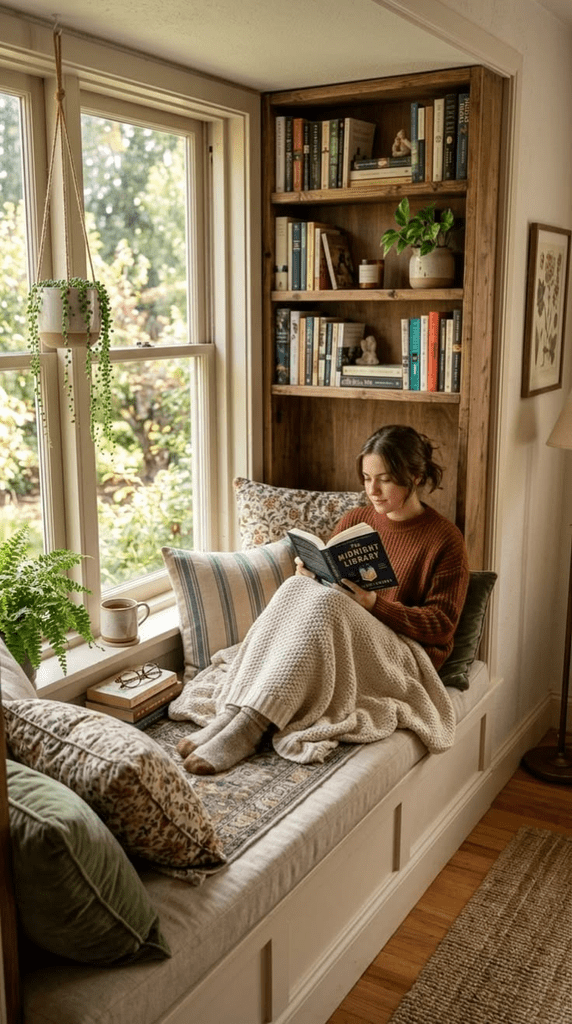
If you enjoy spending long periods reading, a deeper daybed-style bench can provide more flexibility than a traditional upright seat.
Choose a wide platform with a supportive mattress-style cushion. Add several pillows so you can sit upright, recline, or stretch out while reading.
A neutral upholstered base can keep the design contemporary, while layered textiles make it feel more inviting. Add a lightweight throw that you can easily reach when the room feels cool.
Place a small table nearby for books, drinks, and other essentials. A tall floor lamp with an adjustable head can provide focused light for reading.
This style works particularly well beside a large window or in a quiet bedroom corner. During the day, it can function as a reading retreat, while the spacious surface can also provide a comfortable place for relaxing.
When selecting cushions, prioritize supportive materials that will remain comfortable during longer periods of use.
Summary
A modern reading nook bench can turn an overlooked part of your home into a comfortable and stylish retreat. Built-in window seats, minimalist wooden benches, hidden-storage designs, floating seats, cozy corner benches, bookshelf combinations, alcove seating, curved benches, under-stair nooks, and daybed-style designs all offer different ways to create a dedicated reading space.
The most important elements are comfort, lighting, and thoughtful use of available space. Choose a bench that fits the dimensions of your room, add supportive cushions, and make sure you have enough light for reading. Storage can also make the nook more functional by keeping books and blankets close at hand.
You do not need a large renovation to create a beautiful reading corner. Even a small bench, comfortable cushion, reading lamp, and a few favorite books can transform an unused corner into a place you genuinely enjoy spending time.
FAQ
What is the best bench for a reading nook?
A comfortable built-in window seat, upholstered storage bench, or deep daybed-style bench can work well. The best choice depends on your available space, comfort preferences, and storage needs.
How deep should a reading nook bench be?
The ideal depth depends on how you plan to use it. A standard seat can work for upright reading, while a deeper bench is better if you want to recline or stretch out.
Can a reading bench provide storage?
Yes. Built-in drawers, lift-up seats, cabinets, and open cubbies can provide useful storage for books, blankets, pillows, and other items.
How can I make a reading bench more comfortable?
Use a supportive seat cushion and add pillows against the wall or backrest. A soft throw can provide additional comfort and texture.
What lighting is best for a reading nook?
A focused reading lamp, adjustable floor lamp, or wall-mounted sconce can provide useful task lighting. Position the light so it illuminates your reading material without creating glare.
Can I create a reading nook in a small room?
Absolutely. A narrow window seat, floating bench, corner bench, or under-stair seating can make excellent use of limited space.
What colors work well for a modern reading nook?
Neutral shades such as cream, beige, gray, taupe, brown, and soft white are versatile choices. You can introduce personality through cushions, artwork, books, or small decorative accents.
Do reading nook benches need to be built in?
No. Freestanding benches can create beautiful reading nooks and offer greater flexibility. They are also a useful option for renters or anyone who does not want to make permanent changes.