
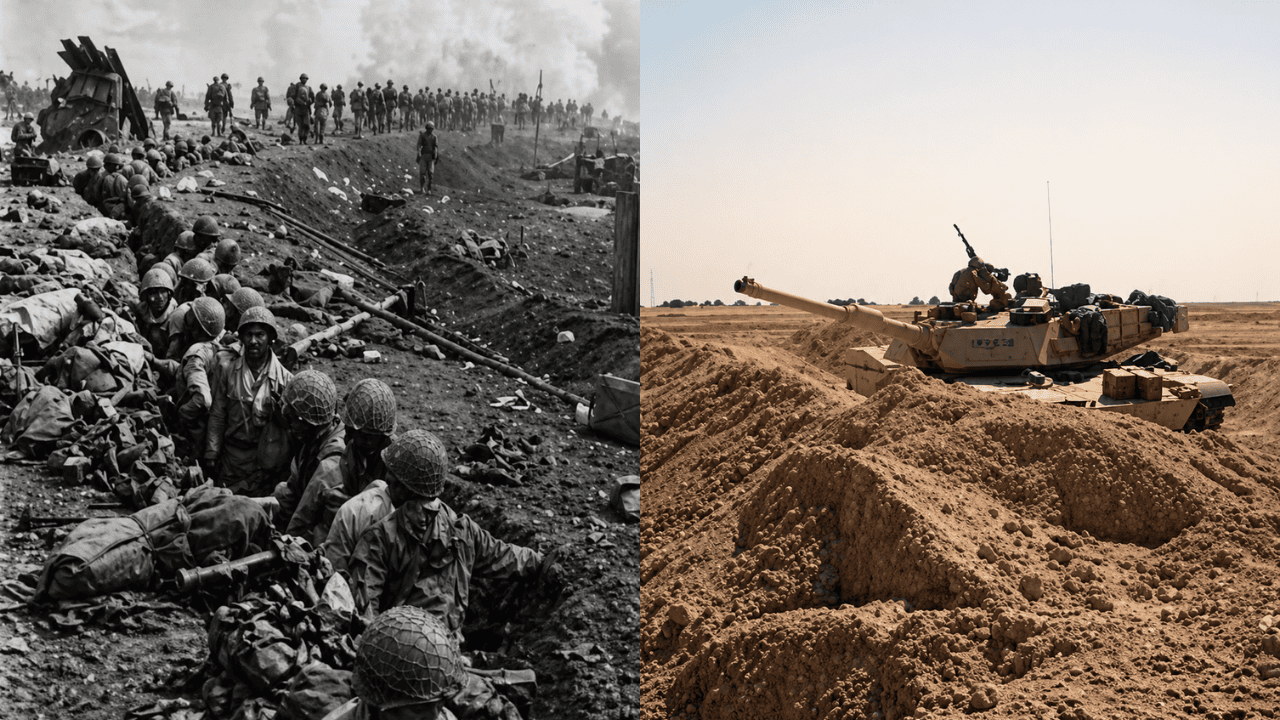
During the Gulf War in 1991, Iraqi forces under Saddam Hussein prepared for what they believed would be a familiar kind of battle. Drawing lessons from World War I, they constructed extensive defensive lines across the desert—deep trenches, fortified positions, and interconnected tunnels designed to slow and trap advancing قوات coalition troops. The strategy relied on forcing the enemy into close, grinding combat, where defensive positions could hold firm.
On paper, it was a logical plan.
Trench warfare had once dominated battlefields, turning open land into heavily defended zones that were difficult and costly to breach. Iraqi commanders expected coalition forces to engage directly, step by step, through these defenses.
But the war did not unfold that way.
Instead of meeting the trenches head-on in traditional combat, U.S. forces adopted a different approach—one that was both simple and highly effective. Using modified armored bulldozers attached to tanks, they drove straight through the defensive lines, pushing massive amounts of sand into the trenches and burying them as they advanced.
It was a tactic that bypassed the need for prolonged firefights.
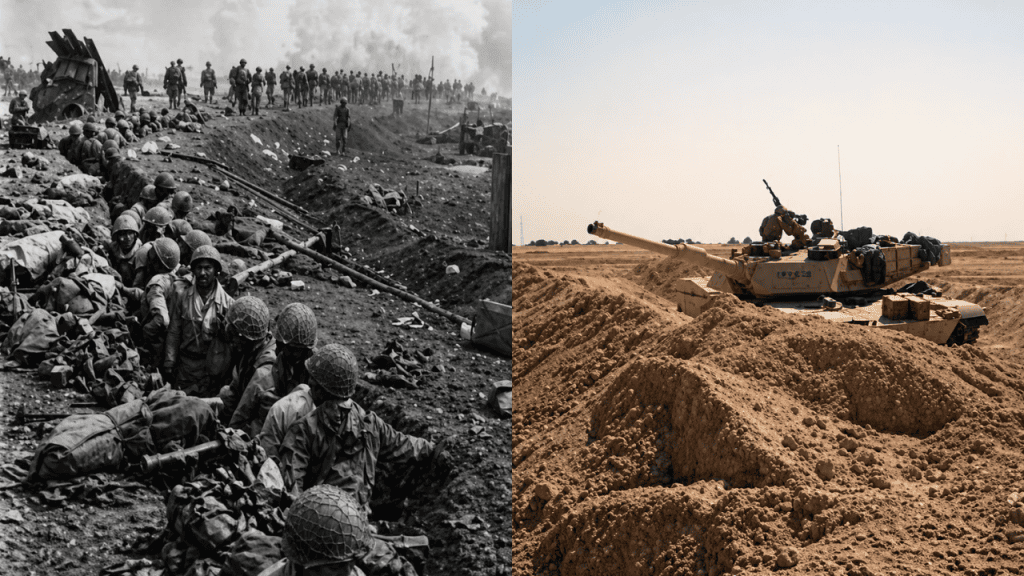
Rather than clearing each position individually, coalition forces effectively erased them. The trenches, which had been designed to provide protection, became obstacles that could be overwhelmed and neutralized in minutes. The defensive system, built with expectations of a past war, proved ineffective against modern, mobile warfare.
This method allowed coalition troops to maintain momentum, avoiding the kind of attrition that trench warfare typically created. It also demonstrated how quickly battlefield strategies can become outdated when faced with new technology and unconventional thinking.
The result was decisive.
Iraqi defensive lines were breached with far less resistance than anticipated, contributing to the rapid success of coalition operations. What had been intended as a strong defensive barrier instead highlighted the limitations of relying on old methods in a changing military landscape.
The Gulf War remains a clear example of how innovation can redefine combat. It showed that victory is not always about confronting an enemy on their terms—but about changing the terms entirely.
In this case, a strategy rooted in the past was overcome by a solution built for the present.