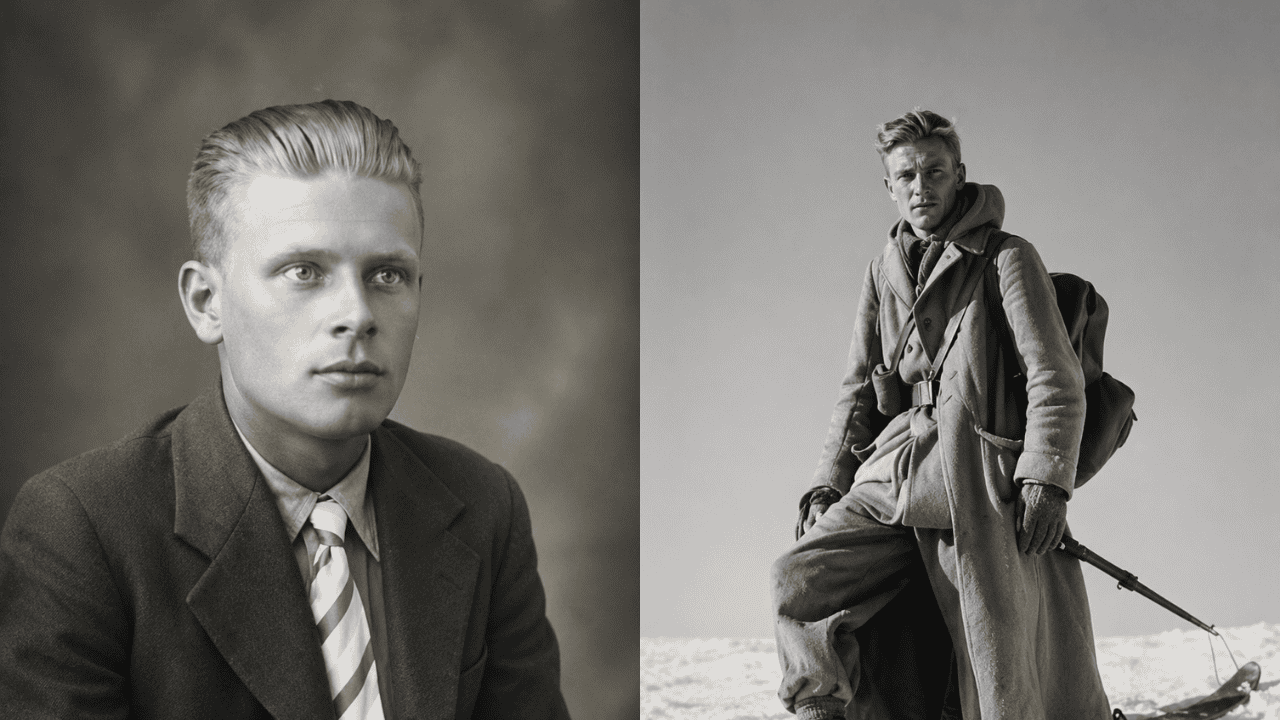
During World War II, survival often came down to endurance, luck, and sheer willpower. Few stories capture this better than that of Aimo Koivunen, a Finnish soldier whose experience during the Continuation War pushed the boundaries of what the human body can withstand.
Koivunen was part of a ski patrol operating deep behind enemy lines in harsh winter conditions. The mission demanded speed, stealth, and constant movement across unforgiving terrain. At one point, as Soviet forces closed in, Koivunen found himself exhausted and struggling to keep up with his unit.
In an attempt to stay alert and continue moving, he made a critical decision. He carried a supply of methamphetamine tablets—issued at the time to help soldiers maintain energy during long operations. Instead of taking a controlled dose, he consumed the entire supply at once.
The effect was immediate and overwhelming.
What followed was a blur of extreme physical exertion, disorientation, and survival against impossible odds. At some point during his escape, Koivunen stepped on a land mine, injuring himself and leaving him isolated in the wilderness. Alone, wounded, and far from support, he faced conditions that would have been fatal for most.
For days, he struggled to stay alive.
With no proper food, he survived on whatever he could find, including pine cones. The freezing environment, combined with his injuries and the effects of the overdose, pushed his body to its limits. Yet, he continued moving, driven by the instinct to survive.
Over the course of his ordeal, Koivunen traveled an extraordinary distance—eventually covering hundreds of miles on skis through snow-covered terrain. By the time he was finally found, his condition was critical. He weighed only 94 pounds, and his heart rate had reached dangerously high levels.
Against all expectations, he survived.
Koivunen’s story is remarkable not just for the circumstances, but for what it reveals about human endurance. It is a combination of extreme conditions, split-second decisions, and an unyielding will to live.
After the war, he went on to live for decades, carrying with him the memory of an experience few could imagine. His survival became one of the most unusual and widely discussed accounts from the war.
Aimo Koivunen’s journey stands as a testament to resilience in its rawest form. In a situation defined by isolation, injury, and overwhelming odds, he endured.
And in doing so, he showed just how far the human body—and mind—can be pushed before it gives in.