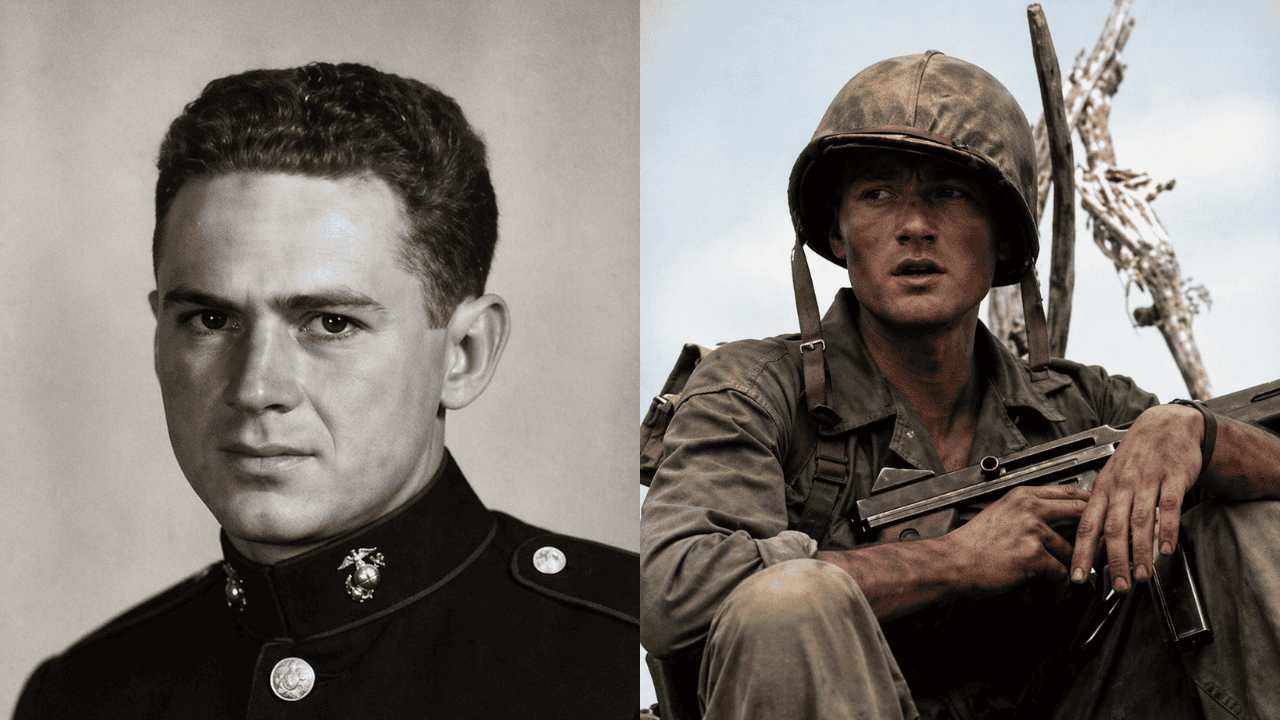
Robert Leckie survived some of the most brutal battles of World War II—but for him, survival did not mean the end of the war. It only marked the beginning of a different kind of struggle.
Serving as a machine gunner in the United States Marine Corps, Leckie fought across some of the most intense and unforgiving battlefields in the Pacific. From the dense jungles of Guadalcanal to the harsh terrain of Cape Gloucester and the devastating conflict at Peleliu, he experienced war at its most relentless. These were battles defined by exhaustion, constant danger, and the ever-present reality of death.
At Peleliu, one of the war’s bloodiest engagements, Leckie’s combat service came to a sudden end. An explosion threw him violently into a tree, injuring him and removing him from the front lines. For many, that moment might have marked relief—a chance to leave the battlefield behind.
But leaving the battlefield did not mean leaving the war.
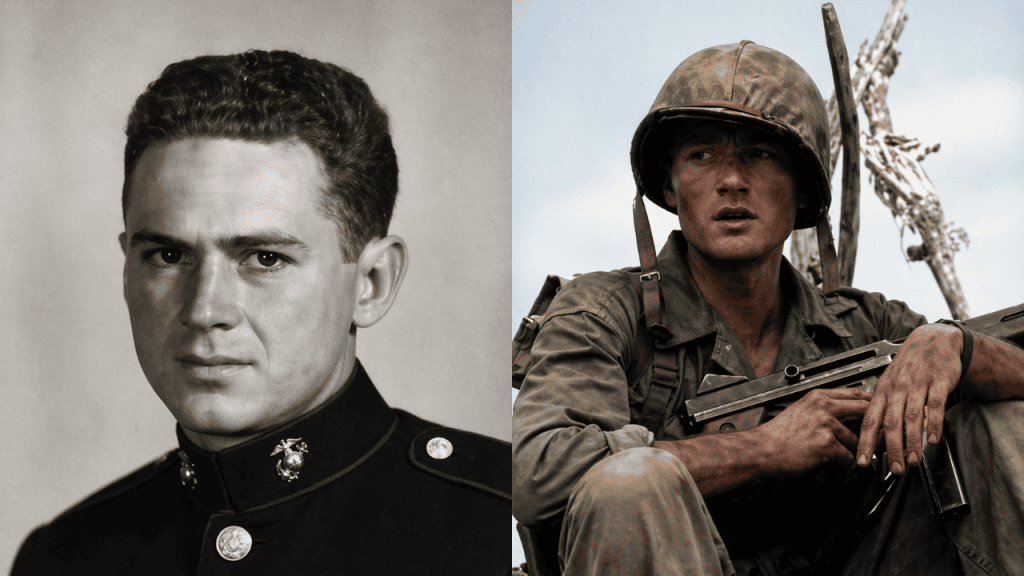
When Leckie returned home in 1945, he carried more than physical scars. The memories of combat followed him—fear that lingered, loss that could not be undone, and a silence that settled in where words often failed. Like many veterans, he faced the challenge of returning to a world that felt distant from what he had lived through.
Rather than keeping those experiences buried, Leckie chose to confront them.
He turned to writing, channeling his memories into a powerful account of war as it truly was—not glorified, not distant, but immediate and human. His memoir, Helmet for My Pillow, offered an unfiltered look at the realities faced by soldiers in the Pacific. It captured the exhaustion, the uncertainty, and the emotional weight that remained long after the fighting stopped.
Through his words, Leckie gave voice to an experience shared by many but spoken of by few.
His story is not just about survival in combat, but about what comes after. It reflects the lasting impact of war on those who endure it—the way it reshapes memory, identity, and life itself. For Leckie, writing became a way to process what he had seen and to ensure that those experiences were not forgotten or misunderstood.
Robert Leckie survived the war.
But as his story shows, the war did not leave him.
It stayed—in memory, in silence, and in the words he chose to share with the world.