
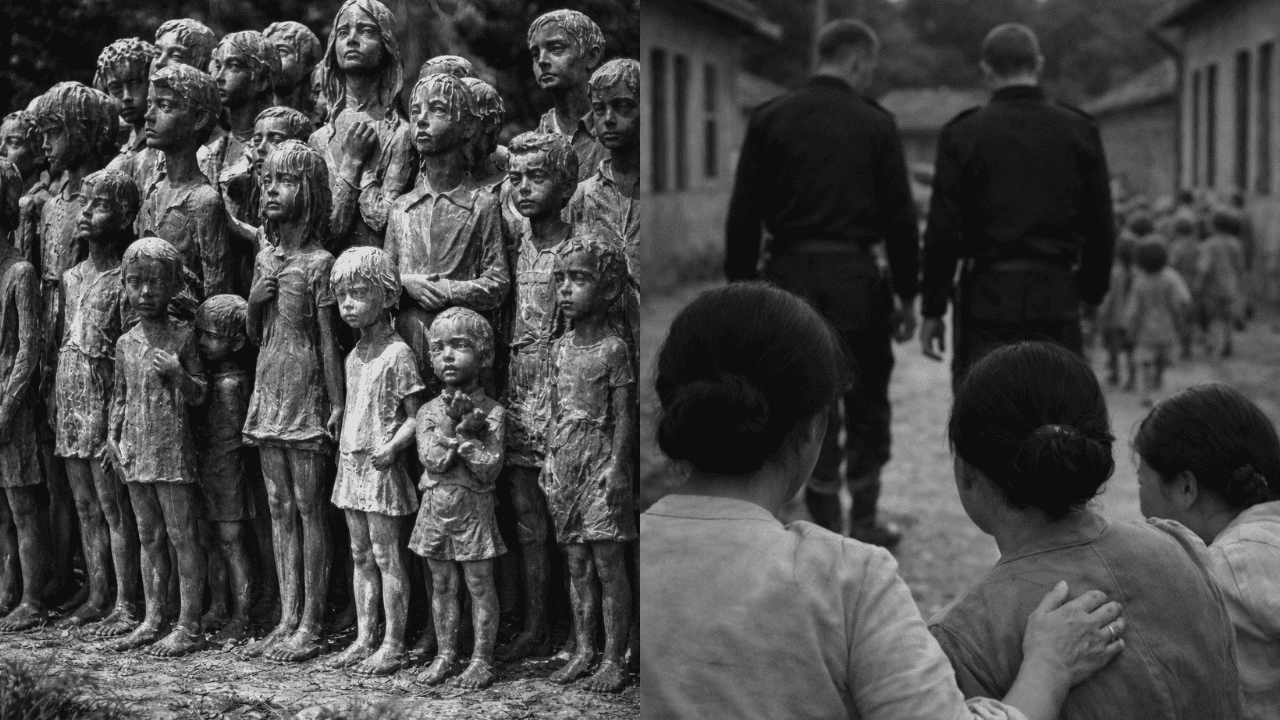
In 1942, in the occupied lands of Czechoslovakia, the village of Lidice became the site of one of the most devastating acts of Nazi retaliation during World War II. The trigger was the assassination of Reinhard Heydrich, a high-ranking Nazi official. In response, the regime sought not justice, but terror—choosing to make an example that would echo far beyond one small village.
Lidice was selected, despite no proven connection to the attack.
German forces arrived with a clear and brutal purpose. The village was surrounded, its fate already decided. Men were separated and executed. Women were deported to concentration camps. And then came the children.
Eighty-two children from Lidice were taken from their families. They were told they were being sent away—given a story meant to calm fear, a promise that suggested safety. For the mothers, it was a moment of confusion and desperation, clinging to hope in a situation that offered none.
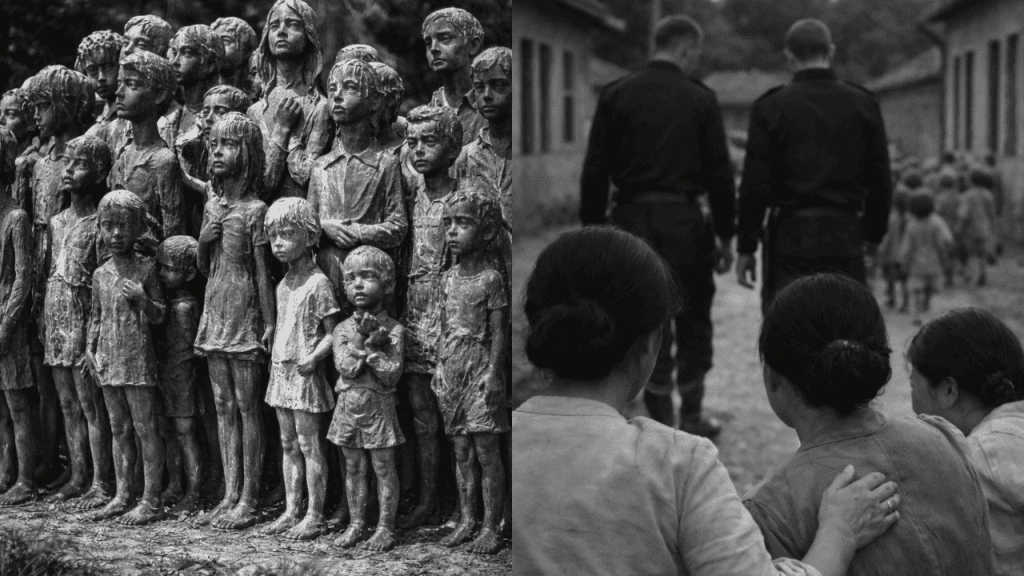
The children were loaded into trucks and transported away from everything they knew.
Their destination was the Chełmno extermination camp. Upon arrival, they were killed. Most were between the ages of one and sixteen. There were no reunions, no return, no second chance. The separation from their families was final.
Back in Lidice, the destruction continued. Homes were burned, buildings reduced to rubble, and even the cemetery was disturbed. The intention was absolute erasure—not just of lives, but of memory. The Nazis sought to remove Lidice from existence, to ensure it would no longer appear on maps or in records.
For a time, it seemed as though they might succeed.
But the story of Lidice did not end there.
News of what had happened spread across the world, carried by those determined that it would not be forgotten. The name “Lidice” became a symbol of loss and remembrance. Communities in other countries adopted the name in tribute, ensuring that the village would live on beyond its destruction.
After the war, Lidice was rebuilt near its original site. Memorials now stand where the village once was, marking the lives that were taken and the families that were torn apart.
The story of the 82 children is one of the most painful chapters in that history. It is a reminder of the human cost of hatred and the devastating consequences of unchecked power.
Lidice was meant to disappear.
Instead, it became something that endures—not in buildings or borders, but in memory.