
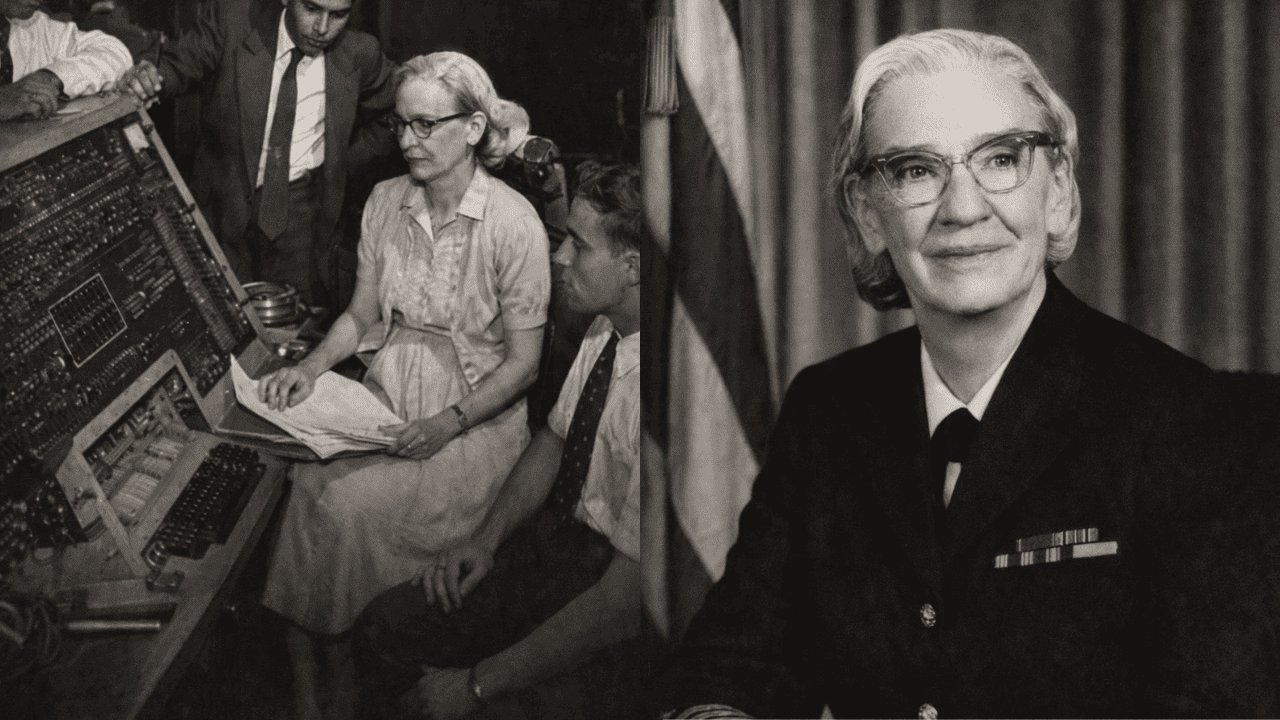
In 1943, as World War II intensified and the United States mobilized every possible resource, a 37-year-old mathematician named Grace Hopper decided she wanted to serve her country. She was highly educated, holding a PhD in mathematics from Yale, and had built a career as a professor. But when she tried to enlist in the U.S. Navy, she was turned away.
The reasons seemed almost trivial compared to her qualifications. She was considered too old for service, and at 105 pounds, she was also deemed underweight. At a time when military leadership struggled to imagine women in technical roles, Hopper didn’t fit the traditional image they expected.
But Grace Hopper was not someone who accepted rejection easily.
Determined to contribute to the war effort, she found another path. She joined the WAVES program—the Women Accepted for Volunteer Emergency Service—and was eventually assigned to work at Harvard University. There, she became part of a team working on one of the earliest large-scale computers ever built: the Harvard Mark I.
The machine was enormous, stretching over 50 feet in length and filled with hundreds of thousands of moving parts. It was capable of performing complex calculations that would have taken humans days or weeks to complete. For many, it was an intimidating and mysterious piece of technology.
For Hopper, it was an opportunity.
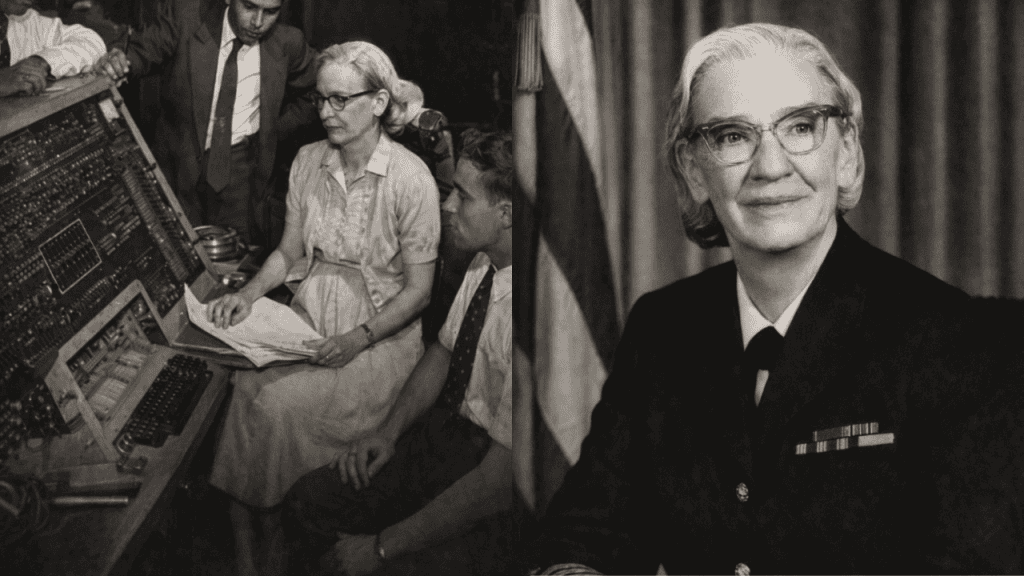
She quickly distinguished herself not just as an operator, but as someone who deeply understood how the machine worked. While others focused on running calculations, Hopper began thinking about how to make computers more accessible and efficient. At the time, programming required writing instructions in highly technical machine code – a language that only a small number of specialists could understand.
Hopper believed computers should be able to understand something closer to human language.
In 1952, she turned that idea into reality by creating one of the first compilers. This groundbreaking innovation allowed written instructions to be translated into machine code automatically, bridging the gap between human thought and computer execution. It was a revolutionary step that would shape the future of computing.
Her work didn’t stop there.
Hopper later played a key role in the development of COBOL, a programming language designed to be readable and practical for business and government use. Unlike earlier systems, COBOL allowed organizations to process data more efficiently, laying the groundwork for modern banking systems, airline reservations, and government databases.
Over time, the woman once rejected for being “too old and too thin” became one of the most influential figures in computer science. She continued to serve in the Navy for decades, eventually achieving the rank of Rear Admiral.
Even in her later years, Hopper remained passionate about teaching and innovation. She often carried small pieces of wire—cut to represent a nanosecond—to help people understand the speed of computers. Her ability to make complex ideas simple inspired generations of engineers and programmers.
Grace Hopper retired at the age of 79, leaving behind a legacy woven into the fabric of modern technology.
Today, every time a computer runs a program written in a human-readable language, it carries a piece of her vision—a reminder that sometimes the people who are initially overlooked are the ones who quietly change the world.