In 1962, a quiet act in a backyard began a movement that would change millions of lives. When Eunice Kennedy Shriver invited children with intellectual disabilities to play and swim at her home, some neighbors complained. At the time, many people believed such children should remain hidden from public view. Eunice saw something very different. She saw potential, joy, and the simple human need to belong.
Eunice Kennedy Shriver had been born into one of America’s most powerful families in 1921. As the sister of President John F. Kennedy, she grew up surrounded by privilege, influence, and opportunity. Yet the cause that defined her life came not from politics, but from something deeply personal within her own family.
Her sister Rosemary Kennedy had developmental disabilities and struggled in a society that offered little understanding or support for people like her. In 1941, without Eunice’s knowledge at the time, Rosemary underwent a lobotomy intended to control her behavior. The procedure was a tragedy. It left Rosemary unable to speak clearly or care for herself, and for years she was largely kept out of public view.
For Eunice, Rosemary’s life left a lasting impact. Instead of allowing silence or shame to define the situation, she chose a different path. She began speaking openly about intellectual disabilities at a time when few public figures dared to address the topic. Her work in social services and advocacy gradually focused on one powerful idea: people with intellectual disabilities deserved the same dignity, opportunity, and respect as anyone else.
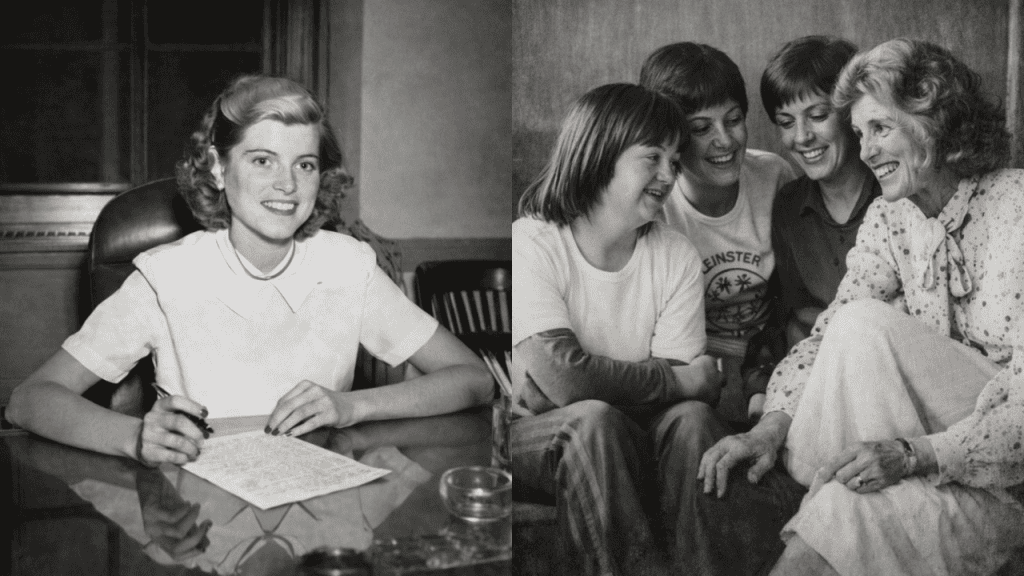
The backyard gathering in 1962 was a simple experiment, but it revealed something important. When children with disabilities were given space to play, compete, and socialize, they thrived. Eunice saw how sports could build confidence, connection, and pride. What began as a small summer day camp quickly grew into something much larger.
Determined to expand the idea, Eunice used her platform and influence to push for broader change. In 1963, she helped support early efforts toward federal legislation addressing intellectual disabilities. But her most visible achievement came a few years later.
In 1968, Eunice Kennedy Shriver organized the first Special Olympics at Soldier Field in Chicago. Around one thousand athletes with intellectual disabilities traveled from across the United States and Canada to compete in track and field events. For many of them, it was the first time they had ever been publicly celebrated for their abilities rather than defined by their limitations.
The event marked the beginning of a global movement. What started as a hopeful gathering of athletes soon expanded into an international organization promoting inclusion, sportsmanship, and opportunity. Over the decades, the Special Olympics grew far beyond what anyone could have imagined.
Today, millions of athletes with intellectual disabilities participate in Special Olympics programs in countries around the world. The games have become a symbol of dignity, perseverance, and community.
Eunice Kennedy Shriver never set out simply to create a sporting event. She wanted to challenge how society saw people with intellectual disabilities. By replacing isolation with inclusion, she helped transform attitudes across generations.
Her work ensured that countless individuals would no longer be hidden away, but instead recognized for their strength, courage, and achievements. What began in a backyard became a movement that continues to inspire the world.