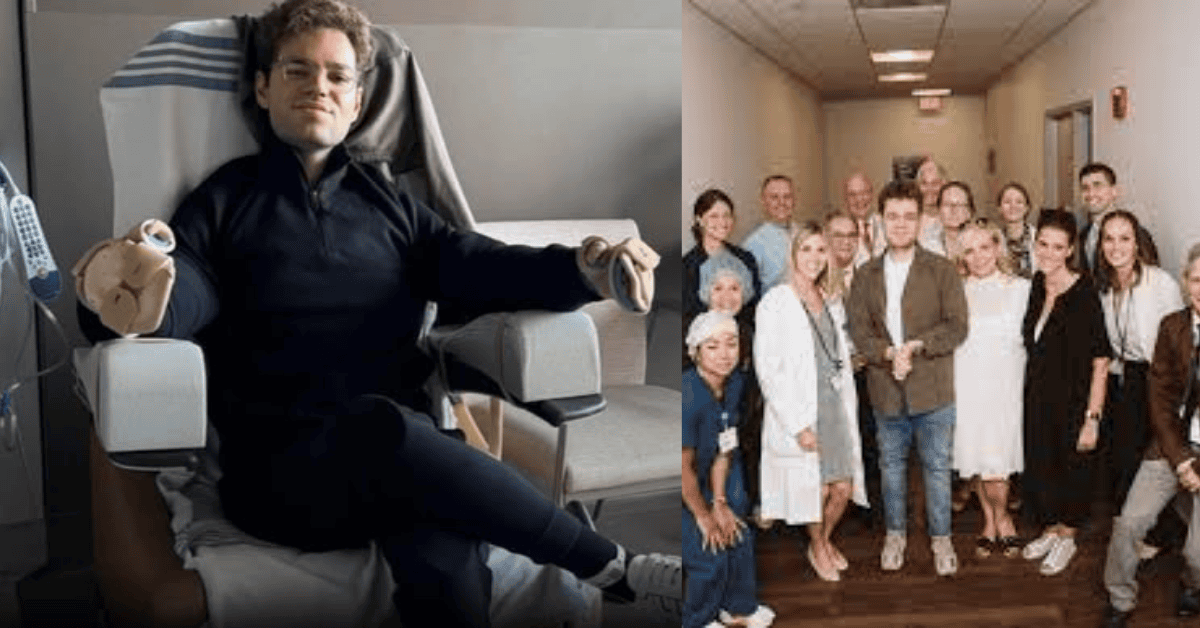
When Luka Krizanac returned to Philadelphia recently, it wasn’t just a visit — it was a homecoming filled with gratitude.
The 29-year-old from Switzerland came back to see the Penn Medicine medical team that gave him something he had lived without for nearly 17 years: his hands. Thanks to a rare and complex double-hand transplant, Luka has regained a level of independence he once thought was impossible.
Luka was just 12 years old when a severe infection changed his life forever. The illness progressed rapidly, and doctors were forced to amputate both of his hands and legs to save his life. Overnight, simple childhood routines disappeared, replaced by years of rehabilitation, prosthetics, and learning how to navigate a world not designed for someone without limbs.
Though he adapted with remarkable resilience, daily tasks remained difficult. Even with advanced prosthetics, things many people take for granted — picking up small objects, texting on a phone, feeling touch – were out of reach.
Still, Luka never stopped hoping.
That hope led him and his family to make a life-altering decision: they moved from Switzerland to Philadelphia so Luka could be close to specialists at Penn Medicine, where doctors were pioneering advanced hand transplant procedures. They waited patiently for years, knowing that finding a donor with the right match was rare and uncertain.
Then, through the Gift of Life donor program, a suitable match was finally found.
The surgery itself was extraordinary. Over the course of 10 hours, surgeons carefully connected bones, muscles, blood vessels, nerves, and tendons — a delicate process requiring precision and teamwork. When Luka woke up, he had new hands.
Recovery didn’t happen overnight. Months of therapy followed, with daily exercises designed to teach his brain and body how to work together again. Slowly, movement returned. Sensation began to grow. One finger at a time, progress emerged.
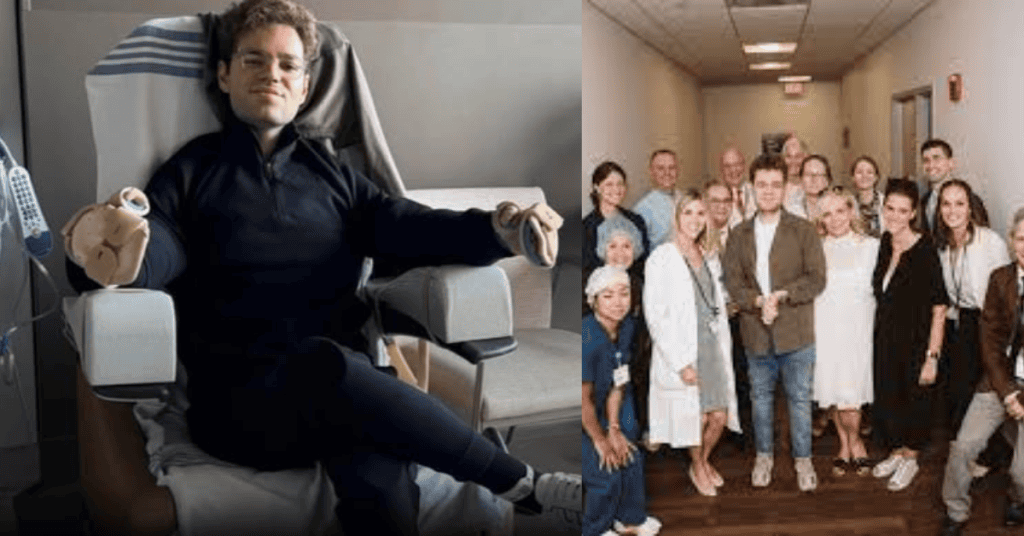
Today, Luka can do things that once felt unimaginable. He can hold objects. He can text. He can perform everyday actions that restore not just function, but dignity and independence. Even more encouraging, doctors say his nerves will continue to regenerate over time, meaning his strength and sense of touch are expected to keep improving.
For Luka, the emotional impact has been just as profound as the physical one.
He has spoken openly about his gratitude to the donor’s family, whose decision during an unimaginably difficult time gave him a second chance at life. He describes receiving his hands as “a dream come true” — not only for himself, but for his entire family, who supported him through years of uncertainty.
Returning to Philadelphia allowed Luka to thank the medical team in person — the surgeons, therapists, and specialists who never gave up on him. Their work didn’t just restore limbs; it restored possibility.
After nearly two decades without hands, Luka Krizanac is building a future shaped not by loss, but by resilience, science, and compassion. His journey stands as a powerful reminder of what’s possible when medical innovation meets human determination — and when one family’s generosity gives another family hope.
And as Luka continues to heal, one thing is clear: his story is still unfolding, and his hands are helping him write the next chapter.