
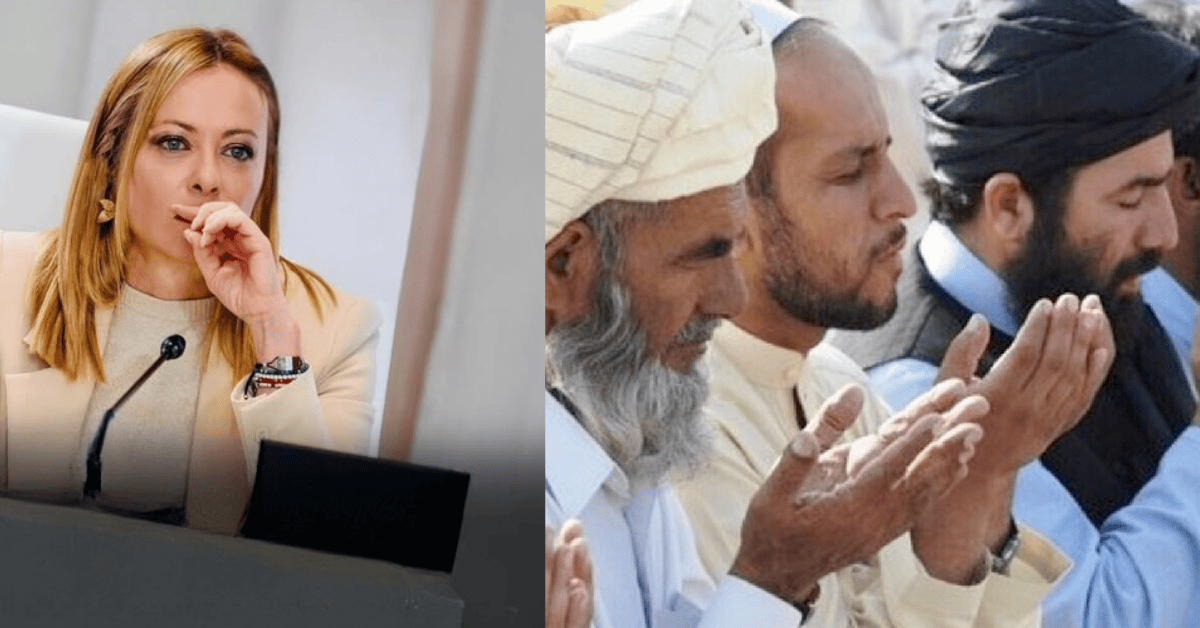
A statement attributed to Italian Prime Minister Giorgia Meloni has once again sparked intense discussion across Europe and beyond, underscoring how sensitive questions of religion, cultural identity, and political values remain in Western societies.
Although brief, the remark quickly traveled far beyond its original context, drawing reactions from political leaders, commentators, and the public. Supporters interpreted the statement as a defense of national identity and traditional values, aligning with Meloni’s broader political stance and her emphasis on sovereignty, history, and cultural continuity.
Critics, however, saw it differently. They argued that the language risked deepening divisions, particularly in multicultural societies already grappling with questions of inclusion, immigration, and secularism. To them, the comment echoed long-standing tensions between religious heritage and pluralistic values, raising concerns about who gets to define “belonging” in modern Europe.
The reaction highlights a familiar pattern. When leaders speak on issues tied to faith and identity, their words are rarely confined to policy debates. Instead, they tap into deeper emotional and historical fault lines – about tradition versus change, unity versus diversity, and the role of religion in public life.
In Meloni’s case, the debate reflects her position as a polarizing figure on the European stage. Admirers praise her clarity and conviction, while critics warn that such rhetoric can oversimplify complex social realities. Social media and international coverage further amplify these divides, often stripping nuance in favor of sharp headlines and opposing interpretations.
What’s clear is that the controversy is about more than a single statement. It speaks to unresolved questions facing many Western democracies: how to balance cultural heritage with evolving identities, how political leaders should address religion in secular states, and how words from those in power can shape social cohesion—or strain it.
As with many moments like this, the lasting impact may not come from what was said alone, but from the broader conversation it continues to fuel across borders and ideologies.