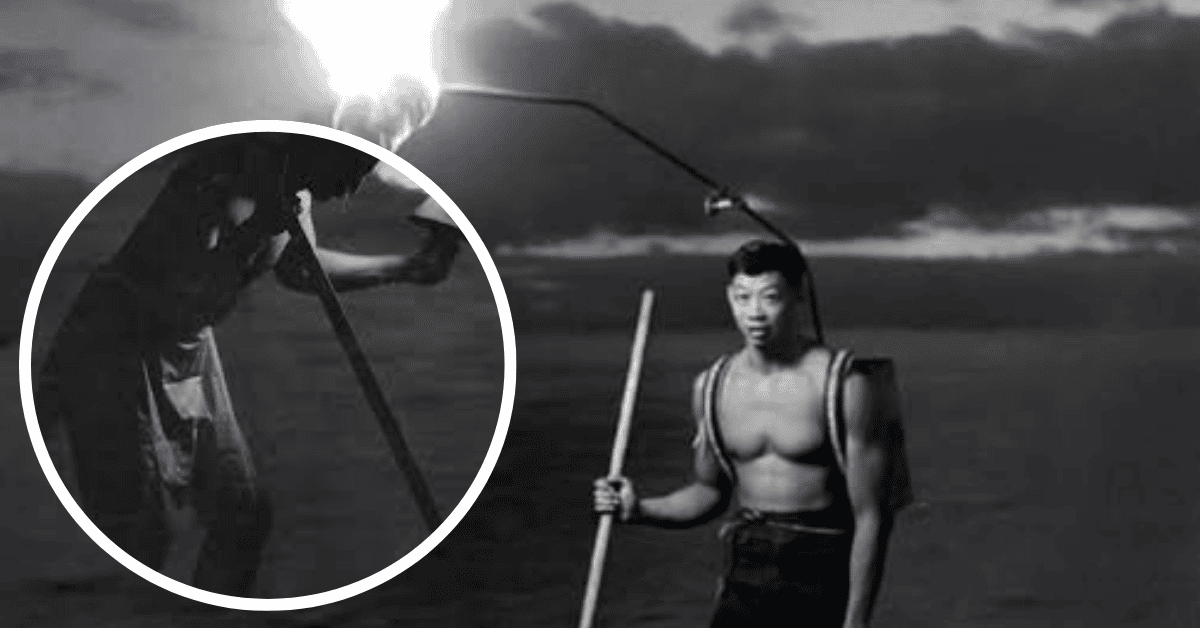
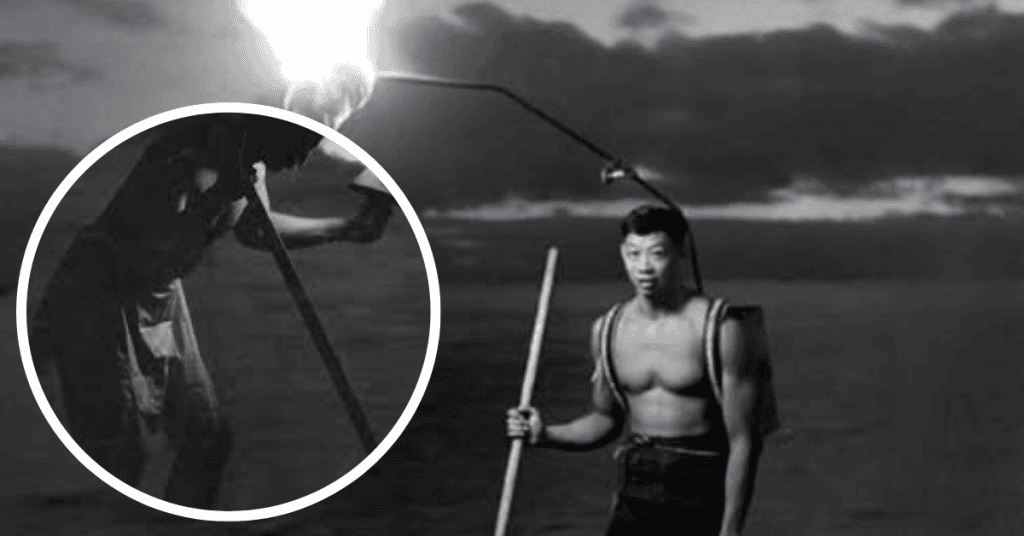
At first glance, the photograph looks almost impossible—a man standing in the dark ocean, a fire burning steadily on his back, as if he had stepped out of a myth or a dream. But this isn’t fantasy. It’s a real moment, a glimpse into traditional Hawaiian night fishing, a practice that existed long before the glow of electric lights or the convenience of modern dive gear.
For generations, coastal Hawaiians ventured into shallow reefs after nightfall to catch fish. Without modern illumination, they relied on open-flame torches fueled by kukui oil. The flickering light did more than reveal the water—it disoriented the fish. Reef fish, startled by the sudden brightness, would freeze or pause, making them easier to spear or net. In the dark, skill, timing, and careful observation were everything.
What sets this image apart isn’t just the flame—it’s how the flame is carried. Most historical accounts describe torches being held in the hand or supported by a companion. Here, the fire is mounted behind the fisherman on a flexible pole, creating a rare hands-free setup. That small innovation made a big difference: it kept the light steady, freed both hands for fishing, and allowed the fisherman to work longer without constantly adjusting the torch. This wasn’t about spectacle. It was about practicality, ingenuity, and survival.
Often, when we talk about “ancient traditions,” we speak as if they were static, unchanging. We imagine rituals frozen in time, bound by rules or ceremony. This photograph quietly pushes back against that notion. Hawaiian fishing knowledge was adaptive. Methods evolved depending on the reef, the surf, the depth, and the number of people involved. If a new approach worked better, it was embraced. Tradition was never about rigidly preserving form—it was about preserving food, skill, and life itself.
Looking closely at this image, you see more than a fisherman. You see a mindset. You see someone deeply attuned to their environment, combining generations of accumulated knowledge with immediate practical problem-solving. You see a culture that treated innovation as inseparable from respect for the past. Every flicker of that torch reflects both human creativity and centuries of understanding the rhythms of the ocean.
The photograph also reminds us that survival often inspired ingenuity. In a world without modern conveniences, people didn’t just make do—they made things better. Tools were adapted to circumstances. Skills were refined in response to conditions. The past wasn’t simply ritualistic or ornamental; it was functional, alive, and responsive.
This image quietly teaches a lesson many modern viewers can overlook: sometimes history isn’t about nostalgia or romanticizing “the way things were.” Sometimes it’s about recognizing how seriously people once took the act of making things work—how carefully they observed, adapted, and innovated in order to live, to eat, and to thrive. In the dark waters of a Hawaiian reef, with fire at his back, one man embodies centuries of ingenuity, skill, and persistence. And that’s the story this photograph tells.