
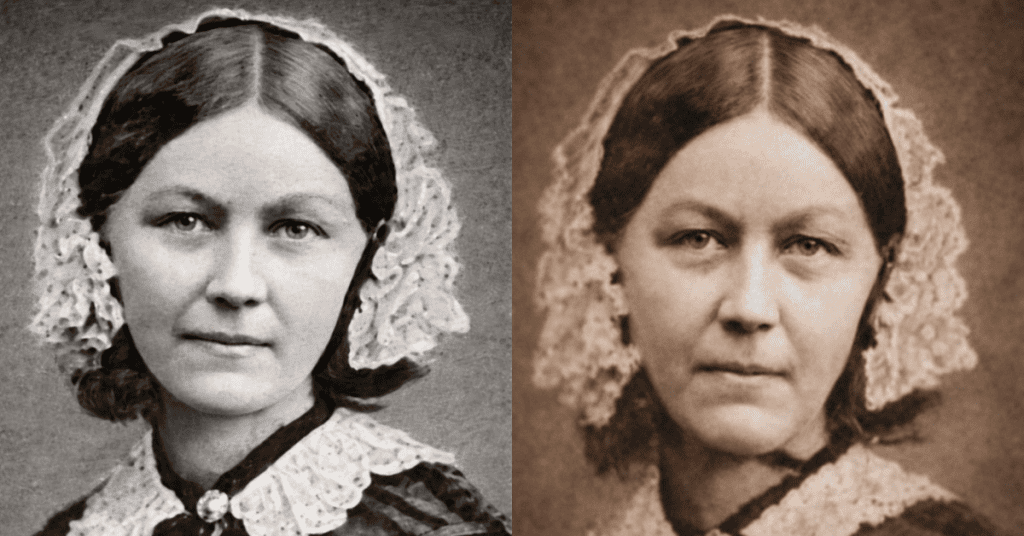
When Florence Nightingale arrived at the Scutari military hospital during the Crimean War, she did not find a place of healing. She found filth, overcrowding, and death.
Soldiers lay on floors soaked with sewage. Rats moved freely through the wards. Wounds were untreated, bedding was rarely changed, and clean water was scarce. Most shocking of all, far more soldiers were dying from disease than from injuries sustained on the battlefield.
This was considered normal.
Florence Nightingale did not accept it.
Arriving in 1854 with a small group of nurses, she faced resistance from military officials who believed sickness was unavoidable and cleanliness unnecessary. But Florence was relentless. She observed carefully, recorded details obsessively, and began implementing basic changes: proper ventilation, clean water, handwashing, laundering bedding, and separating patients to reduce infection.
The results were dramatic.
As hygiene improved, death rates fell sharply. What had once been a deadly pestilence began to resemble an actual hospital. Soldiers who had been written off survived. Recovery replaced resignation.
But Florence didn’t stop there.
She documented everything. She tracked causes of death, recovery times, and conditions within the hospital. When she returned to Britain, she turned this data into visual evidence most famously through her polar area diagrams, which made it impossible to ignore the truth. Disease, not combat, was the greatest killer of soldiers.
Her work challenged military leadership, medical tradition, and government complacency.
Florence Nightingale proved that care was not just compassion it was strategy. Cleanliness saved lives. Evidence mattered. Systems could be changed.
Her influence reshaped hospitals far beyond the Crimean War. Sanitation reforms were implemented across the British military. Civilian hospitals followed. Nursing became a respected profession grounded in training, discipline, and science rather than charity alone.
Florence herself did not seek fame. Though she became a public figure, she preferred to work quietly, advising governments, reforming hospitals, and writing guidelines that would shape medical care for generations.
Today, she is often remembered as “the Lady with the Lamp,” walking hospital corridors at night to comfort the wounded. But that image tells only part of the story.
Her true legacy lies in something less romantic but far more powerful: proof.
Florence Nightingale showed the world that observation, data, and hygiene could save more lives than weapons. She transformed suffering into systems, and chaos into care.
Modern nursing, hospital sanitation, and evidence-based medicine all trace their roots back to her refusal to accept that death was inevitable.
She didn’t just change how soldiers were treated.
She changed how medicine understood life itself.