
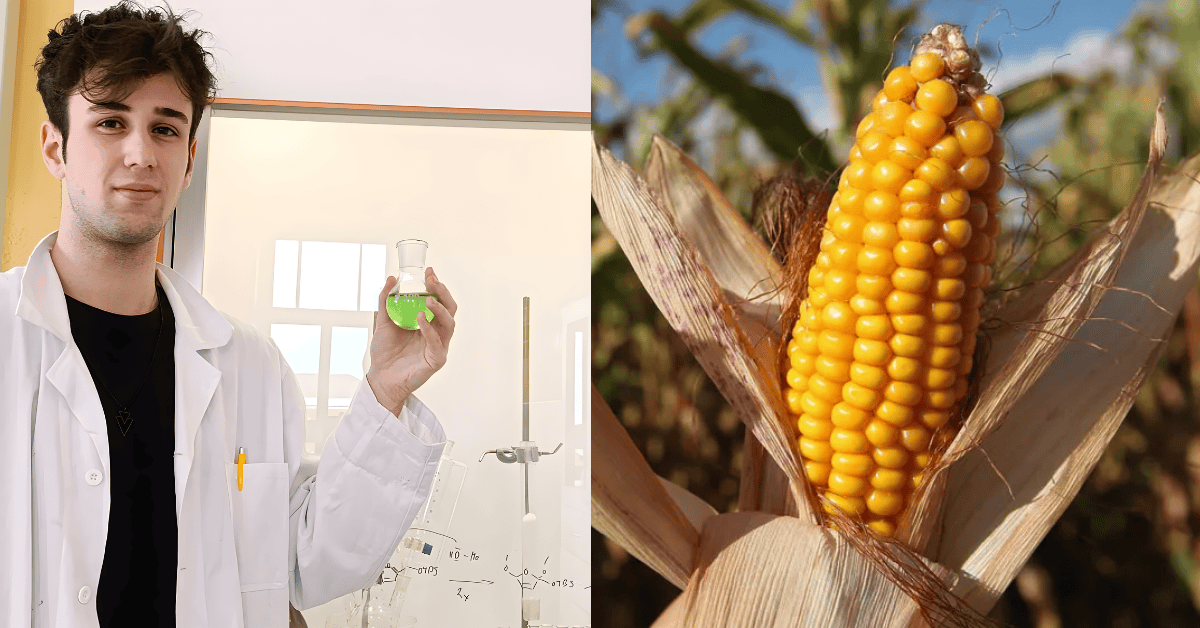
At just 19 years old, Adam Kovalčík wasn’t trying to chase awards or headlines. He was trying to solve a problem that bothered him: why medicines that can save lives are often slow, expensive, and difficult to make—especially in the places that need them most.
That question led the Slovakian student to an achievement that caught the attention of the global scientific community. In 2025, Kovalčík won the $100,000 George D. Yancopoulos Innovator Award at the Regeneron International Science and Engineering Fair for developing a faster, cheaper way to manufacture the antiviral drug galidesivir using an unexpected source: corn husks.
Galidesivir is a broad-spectrum antiviral that has shown promise against dangerous RNA viruses, including COVID-19, Ebola, and Zika. The problem has never been its potential—it’s been production. Traditional manufacturing requires a long, complex sequence of chemical reactions, driving up cost, time, and resource use. For countries facing outbreaks with limited infrastructure, that complexity can be a barrier to access.
Kovalčík’s innovation tackles that bottleneck head-on. By using a corn-derived chemical compound, he found a way to streamline the synthesis process, cutting the number of chemical steps nearly in half. Fewer steps mean fewer materials, less energy, and significantly lower costs. In practical terms, his method reduces the price per gram of the drug dramatically, making large-scale production far more realistic.
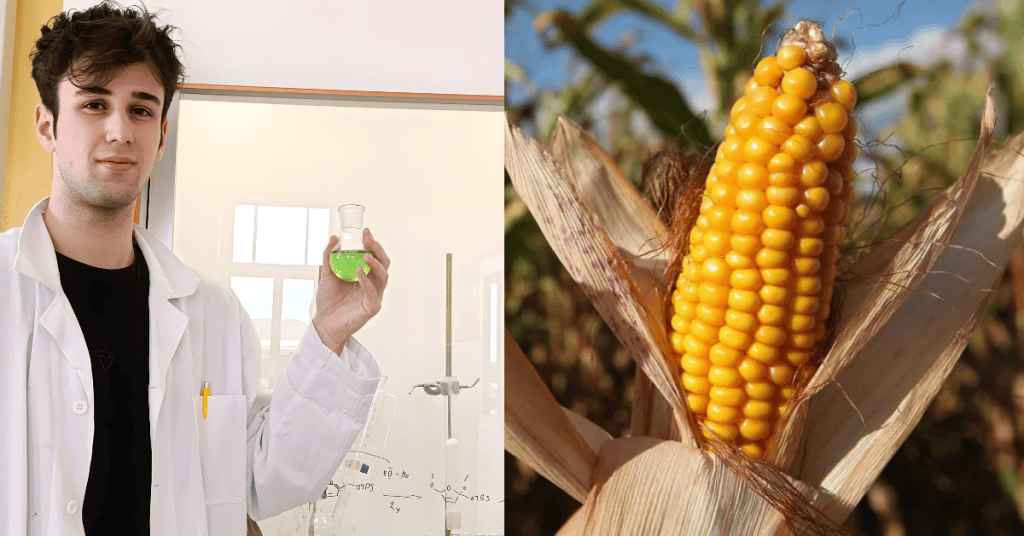
What makes the work especially striking is not just the chemistry, but the mindset behind it. Corn husks are an agricultural byproduct—often discarded or undervalued. Kovalčík saw them as an opportunity. By rethinking where essential chemical building blocks come from, he demonstrated how sustainability and medical innovation don’t have to be separate goals.
Judges at the Regeneron ISEF recognized both the technical brilliance and the real-world implications of his work. The George D. Yancopoulos Innovator Award is reserved for projects with the potential to change how science is applied beyond the lab, and Kovalčík’s research fit that vision perfectly. His approach could open the door to broader antiviral research and faster responses during future outbreaks.
Despite the recognition, Kovalčík remains focused on what comes next. He has filed a preliminary patent to protect the process and plans to collaborate with university researchers to scale the method beyond the laboratory. His goal is not to stop at one drug, but to continue exploring how chemistry can make medicine more accessible, efficient, and sustainable.
The prize money gives him flexibility—to fund further research, pursue advanced education, and explore new applications of his ideas. But those close to him describe someone motivated less by prestige than by curiosity and responsibility. He understands that science doesn’t exist in isolation. It shapes who gets treated, who waits, and who is left out.
Kovalčík’s story resonates because it challenges assumptions about where meaningful innovation comes from. It didn’t emerge from a pharmaceutical giant or a billion-dollar lab. It came from a teenager willing to look at a common waste product and ask a better question.
Sometimes progress doesn’t arrive through sweeping breakthroughs, but through smarter, humbler changes—ones that make lifesaving tools easier to share with the world.