
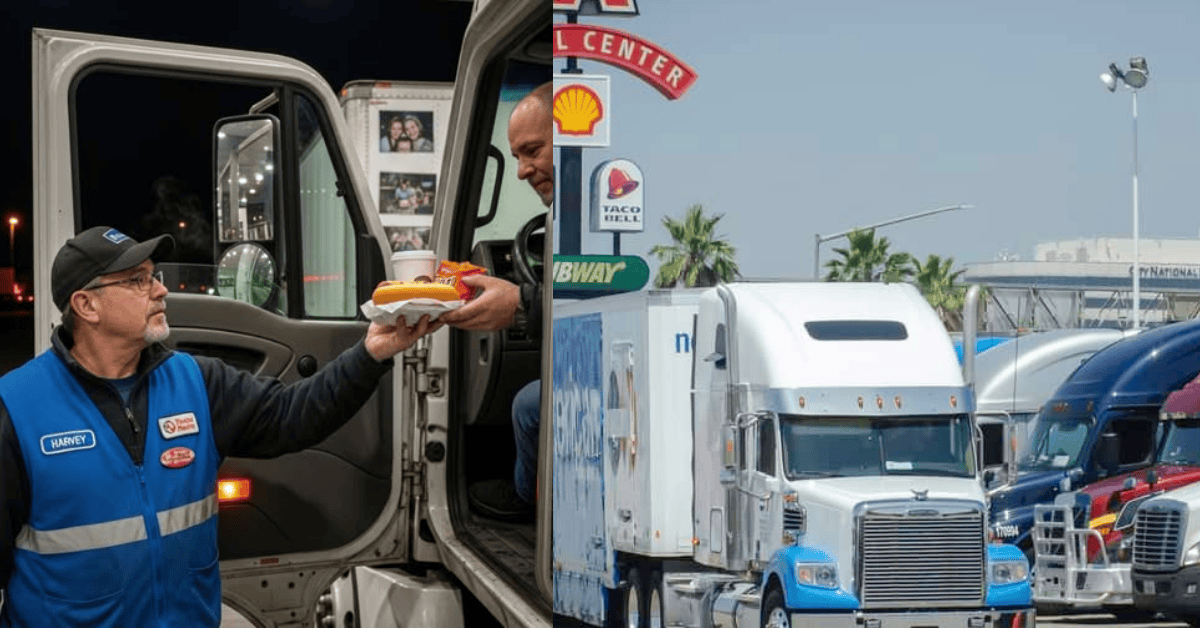
At 68, Harvey has spent more than a decade working the night shift at a truck stop along I-40, serving truckers who stop by to fuel up, grab a quick snack, and get back on the road. His job is simple: pump diesel, ring up snacks, and clean showers. For most of the truckers, it’s a brief stop—usually no more than fifteen minutes. But over time, Harvey started noticing something that didn’t sit right with him.
It was the truckers who weren’t just passing through, the ones who stayed parked for hours—or days. One trucker in particular caught Harvey’s attention. For three days, the man sat in his rig with the engine off, never leaving except for bathroom breaks. He wasn’t eating, didn’t take a shower—he just sat there. Harvey decided to check in. When he knocked on the cab, the driver admitted that his truck was broken down and he was waiting on parts. But what stood out was that he couldn’t afford both the truck repairs and food—so he chose to fix the truck first. When Harvey asked him when he’d last eaten, the answer was shocking: Tuesday. It was Friday.
Seeing the man’s exhaustion and hunger, Harvey went inside, made a hot dog, and brought it back to the trucker along with chips and coffee. “Store policy,” Harvey joked, handing over the food. “Can’t sell day-old stuff,” though the food wasn’t day-old—it was simply unsold. The trucker ate the hot dog, tears running down his face, overwhelmed by the simple gesture of kindness.
This moment was a wake-up call for Harvey, who began to see other truckers in similar situations. There were women sleeping in their cabs because shower credits were too expensive, rookie drivers rationing snacks because their pay barely covered fuel, and seasoned truckers making the impossible choice between feeding themselves and meeting their delivery deadlines. Harvey began to stash “expired” but perfectly good food—sandwiches, snacks, anything he could share—and when drivers looked desperate, he’d quietly offer them what he had.
Soon, word spread on the CB radio, and truckers began stopping by just to thank Harvey for looking out for them. The kindness didn’t go unnoticed, and one trucker, who Harvey had helped years earlier, came back after starting his own company. He left $1,000 with a note: “For drivers who are where I was.” The money went into a new initiative, the “Trucker Relief Fund,” which helped drivers struggling to afford food, showers, or fuel. The idea quickly caught on, and other truck stops followed suit, with 53 locations across nine states joining the movement.
Harvey’s work at the TravelCenter truck stop goes beyond just handing out snacks. He’s learned that truckers, the ones delivering everything we depend on, are often the ones most in need. A breakdown or unexpected expense can ruin them financially. Despite long hours on the road, many truckers don’t have access to basic necessities, like food or a shower, because they can’t afford it. Harvey’s actions have shown that sometimes, small gestures—like giving away expired snacks or offering a shower credit—can make a huge difference.
At the end of the day, it’s about more than just delivering packages. It’s about seeing people, acknowledging their struggles, and offering a little kindness when it’s needed most.