
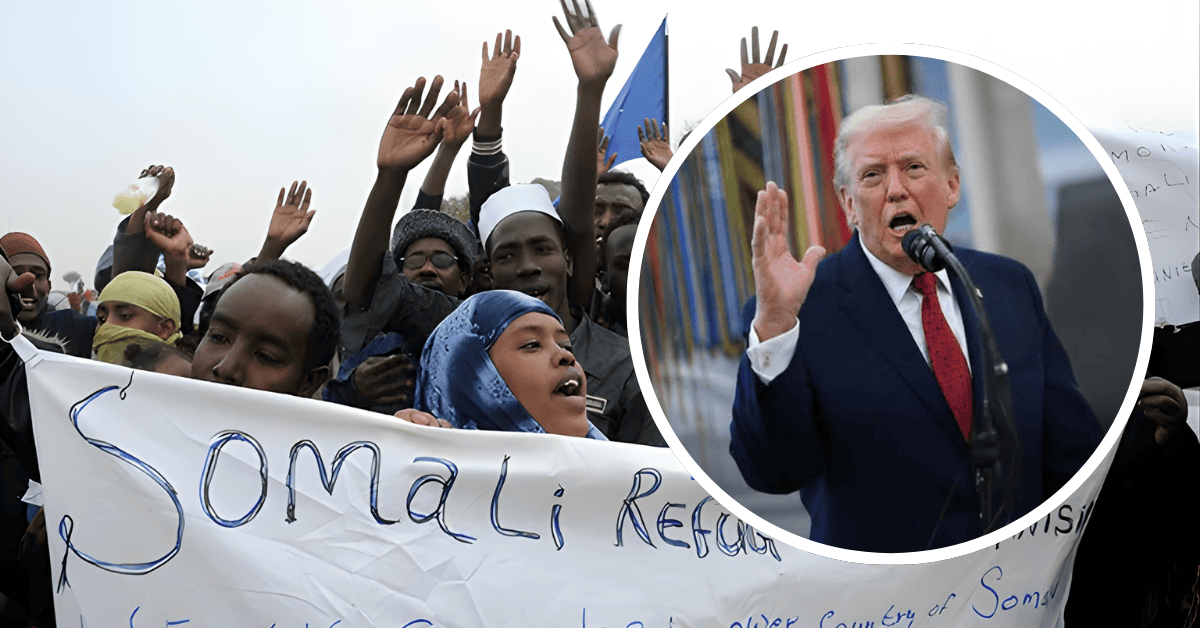
Thousands of Somali nationals living in the United States now face an uncertain future after the Trump administration announced the end of Temporary Protected Status (TPS) for their country. TPS has long allowed these individuals to live and work legally in the U.S., providing protection from deportation because conditions in Somalia were considered too dangerous for a safe return. With this status ending, affected individuals are expected to leave the country by March 2026—or risk facing deportation.
The government argues that the security situation in Somalia has improved enough to allow citizens to return safely. However, critics of the decision point out that the reality on the ground remains challenging. Somalia continues to struggle with ongoing violence, political instability, and widespread humanitarian crises. Many fear that sending people back now could put them in serious danger, undoing years of stability and progress they’ve managed to build in the U.S.
For those impacted, this policy change is more than a legal matter—it’s deeply personal. Many Somali nationals have lived in the United States for decades, raising children, pursuing careers, and contributing to their communities. They have formed deep roots, and the prospect of leaving everything behind is both daunting and heart-wrenching. Families worry about being separated, and individuals worry about being forced to return to a country where daily life can be unsafe and unpredictable.
Advocacy groups and community leaders have spoken out against the decision, emphasizing the human cost. They stress that TPS is not just a legal designation; it’s a lifeline that has allowed thousands of people to rebuild their lives in safety. Removing it could disrupt communities, destabilize families, and put vulnerable people at risk. These organizations are calling for urgent legislative action to extend protections or provide permanent residency options for those affected.
At the heart of the debate is a clash between policy and human impact. On one hand, the government frames the decision as a response to improved conditions abroad, but for many families living in the U.S., the reality is far more complex. Years of integration, work, and community ties have made the United States their home. Returning to Somalia is not just a geographic change—it would mean leaving behind everything familiar, from education and healthcare to friendships and professional networks.
As March 2026 approaches, affected individuals and their supporters are grappling with uncertainty and fear, while advocacy groups work tirelessly to raise awareness and push for solutions. The situation underscores a larger conversation about immigration, humanitarian protection, and the responsibilities nations hold toward people who have built meaningful lives within their borders. For Somali nationals facing the end of TPS, the next few years will be a critical time of uncertainty, advocacy, and difficult decisions that will shape the lives of thousands of families.